[bt_section][bt_row][bt_column width=»1/1″][bt_hr top_spaced=»topSpaced» bottom_spaced=»not-spaced» transparent_border=»noBorder» el_class=»» el_style=»» responsive=»»][/bt_hr][/bt_column][/bt_row][/bt_section]

Congreso-Aiza2023-1200x1264.jpg

15 marzo, 2023 AnimalsNews0

On March 2-3 and 4, Oasys MiniHollywood participated in the annual congress of the Iberian Association of Zoos and Aquariums (AIZA) 2023 held in Gran Canaria at the Poema de Mar aquarium.

Under the motto PROMOTING CONSERVATION, the congress was dedicated to making visible the impulse that zoos and aquariums give to the BIODIVERSITY CONSERVATION CYCLE proposed by the International Union (IUCN) in its Strategy for the Conservation of Nature.

In the meeting of more than 100 professionals from different management areas of zoological institutions, they discussed, among others, the IUCN Reverse the Red movement, as well as the captive breeding and reintroduction projects of threatened species carried out by the institutions zoos belonging to AIZA, as well as the application of new technologies in the education departments of zoos and aquariums.

This year Oasys MiniHollywood has had a strong involvement in the development of the congress, since one of the park’s veterinarians, Javier Romera Mondragón, has been chosen as head of the AIZA Veterinary Group this year, and will be in charge of the development of the veterinary part of the next congress.

In addition, he has presented a clinical case of one of the animals from the Oasys park in the central exhibition hall, making known the work of veterinary care carried out in our zoological collection.

Carrying out these external presentations helps the continuous training and improvement of the education, research and veterinary departments of the zoos that are part of the association.

AIZA brings together the most important zoos and aquariums in Spain and Portugal with the purpose of strengthening relations between them, at a technical and educational level, as well as encouraging zoos to be centers for animal recovery and conservation, as well as environmental education.

In these annual congresses it is possible to unify criteria and that all zoos walk together towards the same objective of educating for and for the conservation of nature.

Like every year, Oasys MiniHollywood involved in the conservation of protected species and nature.


Congreso-Aiza2023-1200x1264.jpg

Los pasados 2-3 y 4 de Marzo, Oasys MiniHollywood participó en el congreso anual de la Asociación Ibérica de Zoos y Acuarios (AIZA) 2023 celebrada en Gran Canaria en el acuario Poema de Mar.

Bajo el lema IMPULSANDO LA CONSERVACIÓN, el congreso estuvo dedicado a visibilizar el impulso que los zoológicos y acuarios imprimen al CICLO DE LA CONSERVACIÓN DE LA BIODIVERSIDAD propuesto por la Unión Internacional (UICN) en su Estrategia para la Conservación de la Naturaleza.

En el encuentro de más de 100 profesionales de distintas áreas de gestión de las instituciones zoológicas, se abordaron entre otros, el movimiento Reverse the Red de UICN, además de los proyectos de cría en cautividad y reintroducción de especies amenazadas llevados a cabo por las instituciones zoológicas pertenecientes a la AIZA, así como  la aplicación de las nuevas tecnologías en los departamentos de educación de los zoos y acuarios.

Este año Oasys MiniHollywood ha tenido una fuerte implicación en el desarrollo del congreso, ya que uno de los veterinarios del parque, Javier Romera Mondragón,  ha sido elegido como responsable del Grupo de Veterinarios de AIZA durante el presente año, y se  encargará del desarrollo de la parte veterinaria del próximo congreso.

Además, ha presentado un caso clínico de uno de los animales del parque Oasys en la sala central de exposiciones, dando a conocer la labor de cuidados veterinarios llevados a cabo en nuestra colección zoológica.

La realización de estas ponencias externas ayuda a la formación continua y la mejora de los departamentos de educación, investigación y veterinaria de los zoológicos que forman parte de la asociación.

AIZA reúne a los zoos y acuarios más importantes de España y Portugal con el propósito de fortalecer las relaciones entre ellos, a nivel técnico y educativo, así como fomentar que los parques zoológicos sean centros de recuperación y conservación animal, así como de educación ambiental.

En estos congresos anuales se consigue unificar criterios y que todos los parques zoológicos caminen juntos hacia el mismo objetivo de educar por y para la conservación de la naturaleza.

Como cada año, Oasys MiniHollywood implicado en la conservación de especies protegidas y la naturaleza.


Feeding_Samburu_c_GZT_4-1200x900.jpeg

2 febrero, 2023 AnimalsNews0

Grevy’s zebras (Equus grevyi) are in serious danger of extinction. Less than 2,000 adults remain in the wild, in small protected areas in northern Kenya and southwestern Ethiopia.

In addition to the problems generated by the habitat destruction to create new farmland, hunting, poaching, and the increased human disturbance, they are facing a terrible ongoing drought in their feeding areas, so many animals are dying of thirst and hunger.

Oasys MiniHollywood has responded to the desperate call for help from the European Association of Zoos and Aquariums (EAZA), due to the high risk of losing the few individuals that remain in the wild, which would put an end to the conservation efforts carried out over the past two decades.

For five long years, Kenya has been suffering from persistent droughts, with the latter being the most severe as a result of increased temperatures caused by climate change. The situation for wildlife is serious.

Marwell Wildlife, as well as Grevy’s Zebra Trust, have been providing hay and water to these wild individuals over 16 months, supporting the survival of more than 700 specimens.

From Oasys MiniHollywood we have supported these huge conservation efforts carried out for the conservation of this species —which is running out of time— and the stabilization of declining populations. All this work to preserve Grevy’s zebras in the wild could be wasted if we stop feeding these few individuals.

For this reason, from Oasys MiniHollywood we would like to invite you to contribute, as far as possible, with a donation to purchase food and water for the endangered individuals, which can be made via the following link:


https://www.justgiving.com/fundraising/tanya-langenhorst


Thank you for your help!


Feeding_Samburu_c_GZT_4-1200x900.jpeg

2 febrero, 2023 EspeciesNoticiasOasys0

Las  cebras de Grevy (Equus grevyi), se encuentran en grave peligro de extinción. Menos de 2000 ejemplares adultos quedan en estado salvaje, en pequeños espacios protegidos al norte de Kenia y suroeste de Etiopía.


Además de los problemas generados por la desaparición de su hábitat para aumentar los campos de cultivo, la caza y captura de animales por los cazadores furtivos y el aumento de la presión por parte del ser humano, en el último año se han tenido que enfrentar a la gravísima sequía que está azotando sus zonas de alimentación, por lo que gran cantidad de animales están muriendo de sed y de hambre.


Oasys MiniHollywood ha acudido a la llamada desesperada de ayuda por parte de la Asociación Europea de Zoos y Acuarios (EAZA), debido al alto riesgo de perder los pocos ejemplares que quedan en la naturaleza en estado salvaje y acabar así con casi dos décadas de esfuerzos en la conservación de esta maravillosa especie.

Kenia lleva sufriendo cinco largos años de sequías, siendo este último el más grave debido al aumento de temperaturas por el cambio climático. La situación para la fauna salvaje es desesperada.

Marwell Wildlife así como la Fundación para la cebra de Grevy (Grevy´s Zebra Trust), han estado proporcionando heno y agua a estos ejemplares salvajes durante 16 meses, apoyando la supervivencia de más de 700 ejemplares.

Desde Oasys MiniHollywood  hemos apoyado esta inmensa labor para la conservación de una especie a la que se le acaba el tiempo, intentando estabilizar las poblaciones que ya se encuentran en declive. Todo este esfuerzo por la protección de las cebras de Grevy en estado salvaje podría perderse si no se continúa alimentando a estos pocos ejemplares.

Por ello, desde Oasys MiniHollywood, quisiéramos invitarle a contribuir, en la medida de lo posible, con una donación para la compra de alimentos y agua para estos ejemplares en peligro de extinción, que podrá realizar a través del siguiente enlace:

https://www.justgiving.com/fundraising/tanya-langenhorst


Gracias por su colaboración!


LEYENDAS-UDA-1200x800.jpg

El pasado 27 de diciembre a las 19:00 en el Estadio de los Juegos Mediterráneos tuvo lugar un partido entre las Leyendas UDA y la Selección Andaluza de Leyendas en homenaje al ex jugador rojiblanco José Ortiz, cuyos beneficios iban destinados íntegramente a la Asociación de Padres de Niños y Adolescentes con Cáncer de Almería y Provincia (ARGAR).

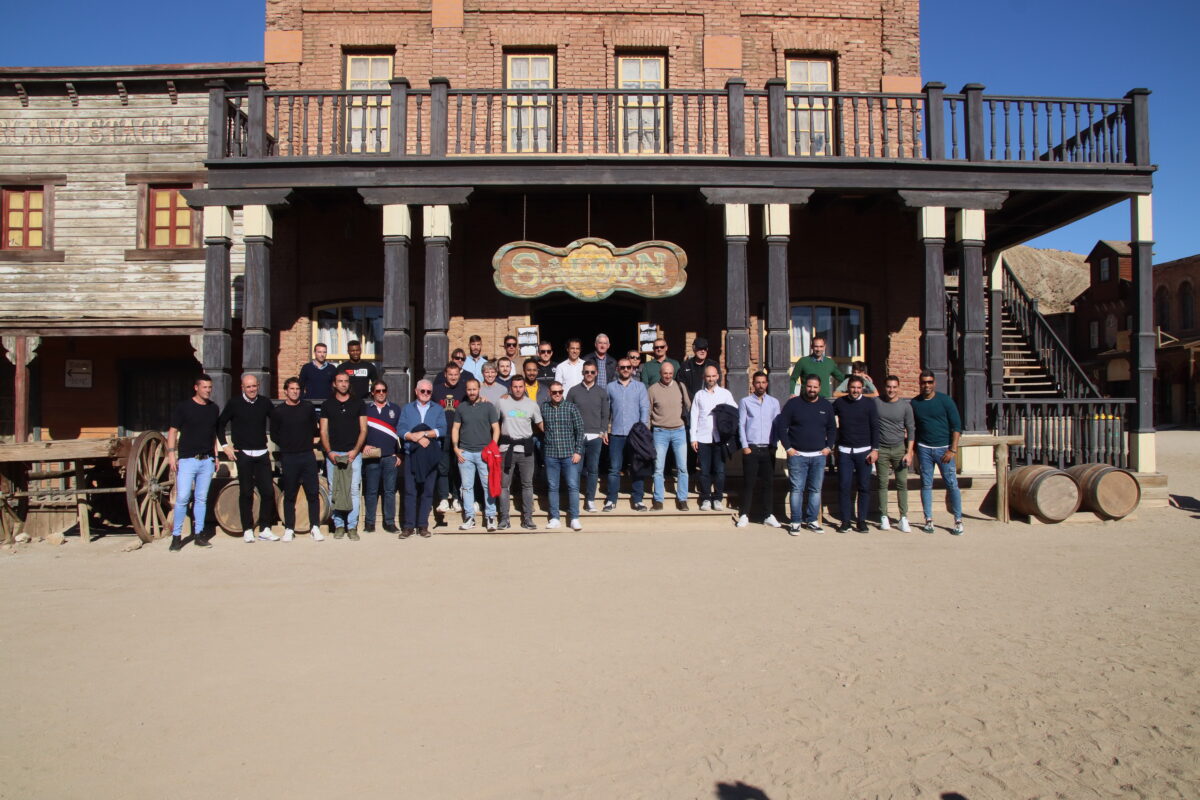
Con motivo del evento se congregaron en la ciudad jugadores de ambas selecciones procedentes de toda Andalucía con sus familiares y disfrutaron de una jornada de convivencia previa al partido en las instalaciones del parque temático Oasys MiniHollywood de Tabernas.

Los asistentes pudieron recorrer libremente este lugar emblemático de la provincia, que alberga una reserva zoológica con más de 170 especies de animales diferentes y un mítico poblado del Oeste con escenarios que han sido inmortalizados en innumerables películas y spots publicitarios.

Tras el almuerzo, que también tuvo lugar en las instalaciones de Oasys MiniHollywood, los jugadores y sus acompañantes pusieron rumbo de nuevo a la capital para descansar y reponer fuerzas antes del emocionante partido, gracias al cual se consiguió recaudar una importante suma de dinero para los niños enfermos de cáncer y sus familias.

Senator Hotels & Resorts, en su compromiso con la sociedad almeriense, no ha querido dejar escapar la oportunidad de colaborar con esta maravillosa iniciativa a través de la cesión de las instalaciones de Oasys MiniHollywood.


turacos-cresti-rojos.jpg

27 diciembre, 2022 AnimalsNews0

Very close to these families from Calaos, in the immediate vicinity, we find the family of Tockus Alboterminatus. Smaller than the previous ones, but much more active and even aggressive at times (the male came to attack us), they have been one of the most difficult species with which to establish a relationship of mutual trust.

After quickly adapting to his new facility, the male began to court the female, giving her little «candy» in the form of mealworms, but she didn’t pay much attention to him, so the poor bird went into a depression that made her sick, losing all his tail feathers and with a high degree of anxiety and stress caused by reproductive frustration.

He began to lose weight and no longer wanted the «candy» that he brought him every day. They were hard days, even months. Worried because we didn’t know how to help him and with the anguish of not knowing if he would get it back.

While he was convalescing, the Tockus nasutus couple, in front of his facility, formed a large family with three beautiful chicks. This reality of another male courting his female, singing to her every day and bringing her treats, began to cheer him up again and whetted his appetite for life, gaining weight day by day, singing again in the mornings when I approached his facility and returning to come for the ¨sweets¨.

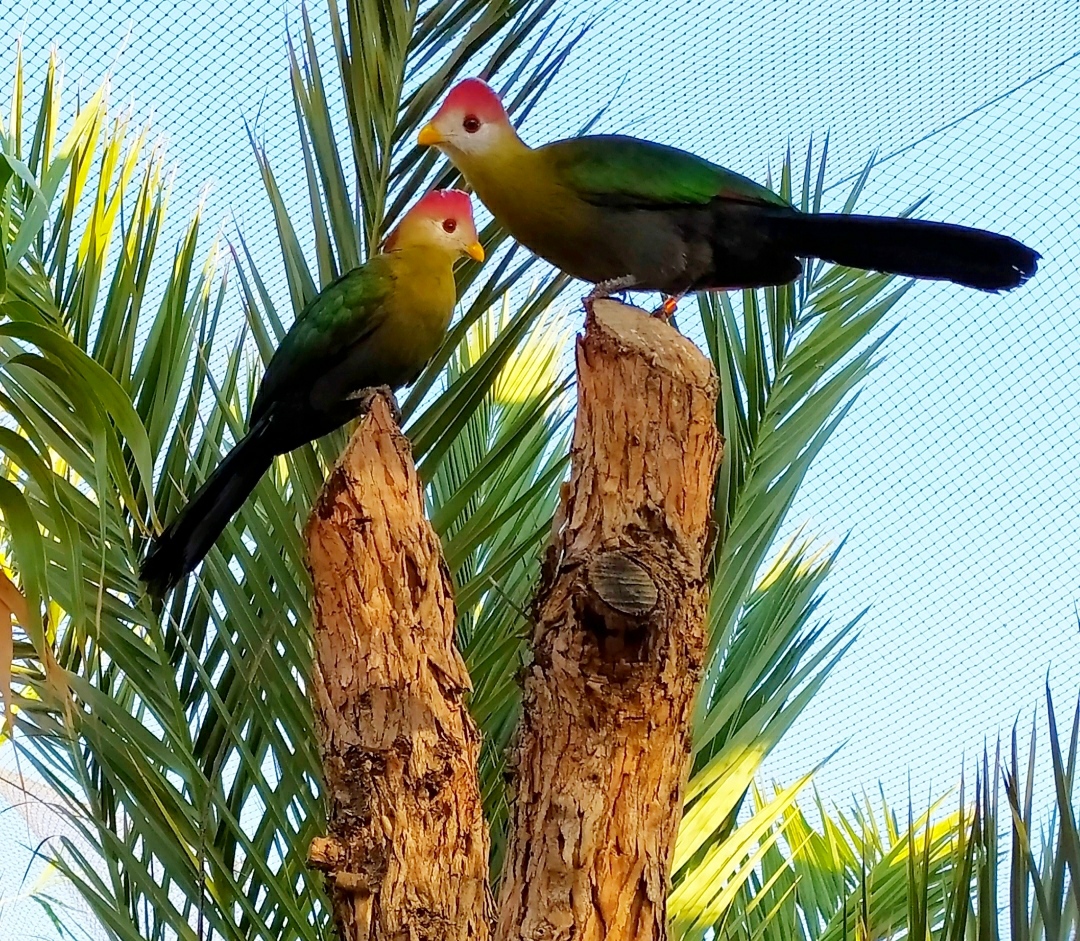
In addition, two steps away from them, the pair of red crested turacos managed to complete the incubation of their eggs, although in the end only one chick survived. Between the top of the palm trees and reeds, a small black earthquake with red feathers on its head, managed to reach adulthood after all the trouble it got into, including the excursion to the aviary of its neighbors the marabous, under the whistles from their frightened parents.

Finally, the Tockus alboterminatus male managed to court his female and both, with our help, reformed their nest with new amounts of mud, until the female felt comfortable to incubate inside.

Just like with the hornbills, our male, happier every day, carefully fed his female and her two chicks, until they were big enough to go outside.

In this same area under my care and supervision, I also enjoy and learn every day from our beautiful pair of Cape Curlews, who lay 2 eggs on the ground, surrounded by small stones that the couple chooses on the floor of their aviary. Both eggs will be vigorously protected by both parents and constantly guarded.

After the incubation period, and grateful for the first egg that we see hatch while the chick struggles to get outside and finally hatch, we receive it with great enthusiasm, moved by all the work and effort put in to get here.

My work involves a great dedication and a great effort, but it is always full of events that make my heart flutter in my chest and tears of emotion and joy in my eyes.

In this story, mine, I have listed some of the species that I keep, with which I share my days, my emotions, with which I learn lessons of progress, suffering and loss, but also joy and overcoming any obstacle along the way.

A story of hope, victory and illusion, which reminds me of the story of Cher Ami, the dove.

All the species that I house gave me parts of their lives without words, with their setbacks, challenges, sufferings and joys, in their times of solitude and with their partners, when they suffered from illness or lost their lives.

But day after day, in their little universe they teach me a lesson in perseverance and joy.

That is why I tell all of you that life is a unique and priceless gift, so enjoy every moment, let yourself be surprised by the beauty of those unique moments and be happy for everything that surrounds you.

Adina Zaha


turacos-cresti-rojos.jpg

Muy  cerca de éstas familias de Calaos, en las inmediaciones, nos encontramos con la familia de Tockus Alboterminatus. Más pequeños que los anteriores, pero mucho más activos e incluso agresivos en ocasiones, (el macho llegó a agredirnos), han sido una de las especies más difíciles con las que llegar a establecer una relación de confianza mutua.

Después de una adaptación rápida a su nueva instalación, el macho comenzó a cortejar a la hembra, regalándole pequeñas ¨golosinas¨ en forma de tenebrios y zophobas, pero ella no le prestaba demasiada atención, por lo que el pobre entró en una depresión que le hizo enfermar, perdiendo todas las plumas de la cola y con un grado alto de ansiedad y estrés  provocado por la frustración reproductiva.

Comenzó a bajar de peso y ya no quería ni las ¨golosinas¨ que todos los días le llevaba. Fueron días duros, incluso meses. Preocupados porque no sabíamos cómo ayudarle y con la angustia de no saber si lo recuperaría.

Mientras él estaba convaleciente, la pareja de Tockus nasutus, frente a su instalación, formó una gran familia con tres hermosos pollitos. Esta realidad  de otro macho cortejando a su hembra, cantándole todos los días y llevándole golosinas, empezó a animarle nuevamente y despertó su apetito por la vida, ganando peso día a día, volviendo a cantar por las mañanas cuando me acercaba a su instalación y volviendo a venir a por las golosinas.

Además, a dos pasos de ellos, la pareja de turacos cresti rojos, lograron llevar a término la incubación de sus huevos, aunque finalmente sólo un pollito sobrevivió. Entre lo alto de las palmeras y juncos un pequeño terremoto negro con plumas rojas en la cabeza, logró llegar a edad adulta después de todos los problemas en los que se metió, incluida la excursión a la pajarera de sus vecinos los marabús, bajo los silbidos de sus asustados padres.

Finalmente, el macho de Tockus alboterminatus, consiguió cortejar a su hembra y ambos con nuestra ayuda, reformaron su nido con nuevas cantidades de barro, hasta que la hembra se sintió cómoda para llevar a cabo la incubación en el interior.

Igualmente que con los calaos, nuestro macho, más feliz cada día, alimentó con esmero a su hembra y sus dos pollitos, hasta que estos fueron lo suficientemente grandes para salir al exterior.

En esta misma zona bajo mi cuidado y supervisión, también disfruto y aprendo cada día de nuestra hermosa pareja de alcaravanes del cabo, que ponen  2 huevos en el suelo, rodeados de pequeñas piedras que la pareja escoge en el suelo de su pajarera. Ambos huevos serán protegidos enérgicamente por sus dos padres y custodiados de manera constante.

Después del período de incubación, y agradecidos por el primer huevo que vemos abrirse mientras el pollito lucha por salir al exterior y por fin nacer, lo recibimos con un gran entusiasmo, conmovidos por todo el trabajo y esfuerzo realizado para llegar hasta aquí.

Mi trabajo supone una gran entrega y un gran esfuerzo, pero siempre está lleno de acontecimientos, que me tienen el corazón agitado en el pecho y  lágrimas de emoción y alegría en los ojos.

En esta historia, la mía, he enumerado algunas de las especies que custodio, con las que comparto mis días, mis emociones, con las que aprendo lecciones de progreso, sufrimiento y pérdida, pero también de alegría y superación de cualquier obstáculo en el camino.

Una historia de esperanza, victoria e ilusión, que me recuerda la historia de la paloma Cher Ami.

Todas las especies que albergo, me dieron sin palabras unas partes de sus vidas, con sus contratiempos, desafíos, sufrimientos y alegrías, en sus épocas de soledad y de parejas, cuando sufrieron alguna enfermedad o perdieron la vida.

Pero día tras día, en su pequeño universo me enseñan una lección de perseverancia y de alegría.

Por eso les digo a todos ustedes que la vida es un regalo único e invaluable, así que disfruten cada momento, déjense sorprender por la belleza de esos instantes únicos y alégrense por todo lo que les rodea.

Adina Zaha


Adina-yCalao1.jpg

20 diciembre, 2022 AnimalsNews0

Life is a flight (Part 1)

My name is Adina Zaha. I have been working as a bird and reptile keeper for over 12 years at Oasys MiniHollywood and I hope you like my experience. I love animals, but especially birds. I discovered this in my workplace, which I never get tired of and which I am passionate about every day. I am in charge of many species that are in danger of extinction or threatened in their native habitats.

Every day I see them feeding their mates, courting each other, building the nest and protecting their young when they have them. It is fascinating to see them, how they groom themselves, how they pamper themselves and give each other affection, to see the joy when I bring them their favorite «candies», but above all to feel their displays of affection when I enter their facilities. I couldn’t choose a favourite species, because there are so many, and I feel that each one of them shares something with me, both in difficult and pleasant moments.

After many years of experience, we have come to the conclusion that having birds in close cages or in front of each other helps them to learn by imitation. Restless birds have calmed down in the presence of tame companions, or even with calm pairs of a different species sitting in front of them, as is the case with our naturally nervous Ceratogymna atrata pair, which learned to be calm from the Bycanistes brevis pair, located in front of them.

Each species and each individual is different. A lovingly prepared nest may not be to the liking of one couple, but be the delight of another. For example, with our pairs of hornbills, without relieving them of their responsibilities, I help the males by preparing the mud and water to wet the ground, being a helping hand that helps them cover the hole where they will feed their females. It is truly a team effort, involving keepers, coordinators, vets and bosses.

During the 3-4 days that will take the male to close the holes where they can access and feed their females, we help them prudently. Generally our females lay 1 or 2 eggs and will remain inside the nest for a minimum of 110 days, while their males will guard the nest and feed them.

We, the team of keepers, make sure that the parents do not lack for anything, especially fruit (apples, grapes, kiwis…). We prepare very small pieces and accompanied by a good portion of special feed for the species, together with extra protein contributions such as meel worms and pinkies.

In the summer we make sure that they do not lack water, nor sufficient humidification, leaving the sprinklers on with small raindrops that stimulate them whenever necessary.

For this reason, on this trip I also want to talk about hope.

The days pass by and we reach the moment when we hear the chirping of chicks from the inside. Our birds have become parents. Males are more energetic when asking us for food, more concerned all the time to provide more food, putting their soul into it. And considering that the family has grown, we prepare double and even triple portions of food. To my delight, the males are more attentive, more trusting, treating us like a member of their family, moving closer to us requesting more food.

After these 110-120 days, the female begins to break the nest with the help of the male (or helped by us), making a small hole through which she emerges, leaving the young inside for a little longer. The joy of the parents at being reunited is evident: they sing, join their beaks and fly together in the installation.

And the hope and illusion of seeing them excites me and scares me at the same time. It is difficult to describe the feelings that overwhelm me, while I wait for «our babies» to come out, because we never know how many there may be. The whole team experiences different emotions and the joy is immense. We did it! And it’s wonderful.

Excited and silent, without moving, we see how the parents call them and encourage them to go outside. And one more year, they have become parents.


Adina-yCalao1.jpg

20 diciembre, 2022 EspeciesEventosNoticias0

La vida como un vuelo (Parte 1)

Mi nombre es Adina Zaha. Trabajo como cuidadora de aves y reptiles desde hace más de 12 años en Oasys MiniHollywood y espero que les guste mi experiencia. Amo los animales, pero sobre todo las aves. Esto lo descubrí en mi lugar de trabajo, del que no me canso y que me apasiona cada día. Tengo muchas especies a mi cargo que se encuentran en peligro de extinción o amenazadas en sus hábitats de origen.

Cada día las veo alimentar a sus parejas, cortejarse mutuamente, construir sus nidos y proteger a sus crías cuando las tienen. Es fascinante verlas, cómo se acicalan, cómo se miman y se dan cariño, ver la alegría cuando les llevo sus «golosinas» favoritas, pero sobre todo sentir sus muestras de afecto cuando entro en sus instalaciones. No podría nombrar una especie más querida o favorita, porque son muchas, y siento que cada una de ellas comparte algo conmigo, tanto en los momentos duros como en los agradables.

Después de muchos años de experiencia, hemos llegado a la conclusión que tener aves en instalaciones cercanas o unas frente a otras les sirve para aprender por imitación. Aves inquietas se han tranquilizado con compañeros mansos o incluso con parejas tranquilas de una especie diferente situadas frente a ellas, como es el caso de nuestra pareja de Ceratogymna atrata, nerviosos por naturaleza, que aprendieron a estar tranquilos gracias a la pareja de Bycanistes brevis situada frente a ellos.

Cada especie y cada individuo es diferente. Un nido preparado con cariño puede no ser del agrado de una pareja, pero ser las delicias de otra. Por ejemplo, con nuestras parejas de calaos, sin relevarlos de su responsabilidades, ayudo a los machos preparando el barro y el agua para mojar la tierra, como una mano amiga que les ayuda a tapar el agujero por dónde alimentarán a sus hembras. Es verdaderamente un trabajo en equipo que involucra a cuidadores, coordinadores, veterinarios y jefes.

Durante los 3-4 días que los machos tardan en cerrar los agujeros por donde acceder y alimentar a sus hembras, los ayudamos con prudencia. Generalmente nuestras hembras ponen 1 o 2 huevos y permanecen dentro del nido durante 110 días como mínimo, mientras que sus machos custodian el nido y las alimentan.

El equipo de cuidadores nos aseguramos de que a los futuros padres no les falte de nada, especialmente fruta (manzanas, uvas, kiwis…). Las preparamos en trozos muy pequeños y se las servimos acompañadas de una buena ración de pienso especial, junto con aportes extra de proteína, como pueden ser los tenebrios, zophobas y pinkies.

También, en el periodo estival, nos aseguramos de que no les falte agua, ni la humidificación suficiente, dejando los aspersores puestos con pequeñas gotas de lluvia que los estimule cada vez que sea necesario.

En este viaje también quiero hablar de la esperanza.

Los días siguen su curso y llegamos al momento en el que escuchamos el piar de los pollos desde el interior. Nuestras aves se han convertido en padres. Los machos son más enérgicos al pedirnos alimento, más preocupados todo el tiempo para proporcionar mayor cantidad de comida, poniendo el alma en ello. Y teniendo en cuenta que la familia ha crecido, preparamos raciones dobles e incluso triples de comida. Para mi deleite, los machos están más atentos, más confiados, tratándonos como un miembro más de su familia, acercándose más a nosotros solicitando más comida.

Después de estos 110-120 días la hembra empieza a romper el nido ayudada por el macho (o por nosotros), haciendo un pequeño agujero por el que sale ella, dejando a las crías dentro durante un poco más de tiempo. La alegría de los padres al reencontrarse es evidente, cantando, juntando sus picos, volando juntos en la instalación.

Y la esperanza e ilusión de verlos me emociona y me asusta a la vez. Es difícil poder describir los sentimientos que me embargan, mientras espero que «nuestros bebés» salgan, porque nunca sabemos cuántos pueden ser. Todo el equipo experimenta emociones diversas y la alegría es inmensa. ¡Lo logramos! y es maravilloso.

Emocionados y en silencio, sin movernos, vemos cómo los padres los llaman y animan a salir al exterior. Y un año más, por fin son padres.


herencia-cultural2.jpg

30 noviembre, 2022 News0

The Spanish cultural heritage in America

Oasys MiniHollywood recently held a conference by the Texan historian Alfonso Borrego, defender of the Spanish cultural heritage in America, as well as the historians Martha Vera and J.Ricardo Danel.

Borrego, the great-grandson of the legendary Apache chief Gerónimo, strongly denies that the Spanish committed genocide in the Americas. He is an ardent defender of the Spanish legacy in America and the ethnic and cultural miscegenation that characterized the time.

As president of the Camino Real de Tierra Adentro Cultural Heritage Society, he travels the world dismantling the Black Legend of the Conquest. In his conference at Oasys MiniHollywood, he made a very illuminating comparison: «In the states with a Spanish name (Arizona, Nevada, Montana, Florida, Colorado, New Mexico, California, Utah or Texas) there are Indian reservations. However, in the non-Spanish states, (Ohio, Alabama, Iowa, Virginia, Mississippi…) there are no Indians. Do you know why? Because the English killed them all.

Historians emphasized that the truth of the history of Spain in America is only being denied by the indigenism, whose purpose is to seek arguments in the past to increase social and national fragmentation in the present.

They stressed that these realities can be found not only in the United States, but also in the nations with a Spanish name in Central America: «Let’s go to Chile, Mexico, Peru, Argentina, Cuba, Puerto Rico, Paraguay, or the Dominican Republic, where the Spanish first arrived, and there are Indians. What happens in the areas that were dominated by the English or by other non-Spanish nations? Aruba, Jamaica, Bahamas, Virgin Island, Cayman Islands… None at all.»

Borrego explains that also senseless are the attacks against the figure of Fray Junípero Serra, the Franciscan who created missions on the West coast of the United States and gave rise to the main cities in that region: Santa Monica, Sacramento, San Francisco, San Diego, Los Angeles… He explains that it was actually the American settlers, during their westward expansion, who wiped out the Indians.

«The Spaniards should not ask for forgiveness. When they arrived, they mixed with the indigenous people. The mestizo children were citizens of the Crown of Castile, with all inheritance rights. It was two cultures combining. The Black Legend in the Spanish conquest was encouraged by England and Holland, but they were the ones who devastated the Indians, not the Spanish.»

Alfonso Borrego affirms that the testimony of Alexander Von Humboldt, at the end of the 18th century, refuted all the falsehoods about the Spanish conquest, making it clear that in the Spanish possessions of America, there were 7 million Indians and 5 million mestizos, who represented 80% of the population.

But as the three historians explain, it is very difficult to dismantle the lies about Spanish colonization, because all this anti-Spanish narrative is installed in the educational system of the United States.

Once again Oasys MiniHollywood participates in the cultural and historical development of the province of Almería.