[bt_section][bt_row][bt_column width=»1/1″][bt_hr top_spaced=»topSpaced» bottom_spaced=»not-spaced» transparent_border=»noBorder» el_class=»» el_style=»» responsive=»»][/bt_hr][/bt_column][/bt_row][/bt_section]

proyecto_lechuza.gif

21 junio, 2023 AnimalsNews0

Once again this year, Oasys MiniHollywood is collaborating in the «Lechuza Project» together with CECOUAL of the University of Almeria (UAL), the Society for the Study and Recovery of Almeria’s Biodiversity (SERBAL), the Group for the Rehabilitation of Native Fauna and its Habitat (GREFA) and the Rodalquilar Botanical Garden. This year, the presentation of the project took place in the recently inaugurated Natural History Pavilion of the UAL.

For the fifth year the barn owl (Tyto alba) chicks, protagonists of a large Conservation Programme whose aim is the repopulation of this species in the province of Almeria using the hacking technique, have just arrived from the hand of GREFA. This year, the eight chicks, aged between 30 and 40 days, will be distributed between the UAL and the Rodalquilar Botanical Garden for their distribution throughout the province.

Since the beginning of the project, a total of 36 owl chicks have been released, all of them bred in captivity from irrecoverable specimens that cannot be returned to the wild.

With this project, carried out since 2018, the aim is to raise awareness so that everyone can learn about the importance of the Conservation Programmes for endangered species such as the barn owl. This is on the List of Wildlife Species under Special Protection Regime at a national level, as its populations have been affected by the degradation of its habitat and the disappearance of sustainable agriculture. This has progressively increased the area of development of industrial agriculture and the use of chemical products, which in turn has led to the disappearance of the birds’ natural prey.

The control of the growth of the chicks will be monitored through surveillance cameras that will allow to see their evolution. As well as the first exploration flights near the nest boxes. Until once they feel safe they emancipate by their own will, in search of new territories and reinforcing the autochthonous population.

Oasys MiniHollywood collaborates with «Proyecto Lechuza» from the beginnings to reinforce the population of this species in the province of Almeria, as well as in many other conservation and nature protection projects.
museos-1200x800.jpg

20 junio, 2023 AnimalsNews0

A renovation that is part of a master plan with major new developments until 2026

With the summer season just started, thousands of families are expected to arrive this summer at the well-known western theme park. An «oasis» in the middle of the desert of Tabernas (Almeria), which is more than ready to welcome everyone with a large aquatic area and lots of trees throughout the enclosure.

One of the big questions that visitors ask themselves, especially repeat visitors or those who have their annual pass, is what new features they will be able to enjoy each new season.

This summer is full of good news, such as the refurbishment of the Grill-Mirador Okavango. Now, a restaurant with grilled meats and a refined touch but with a western essence.

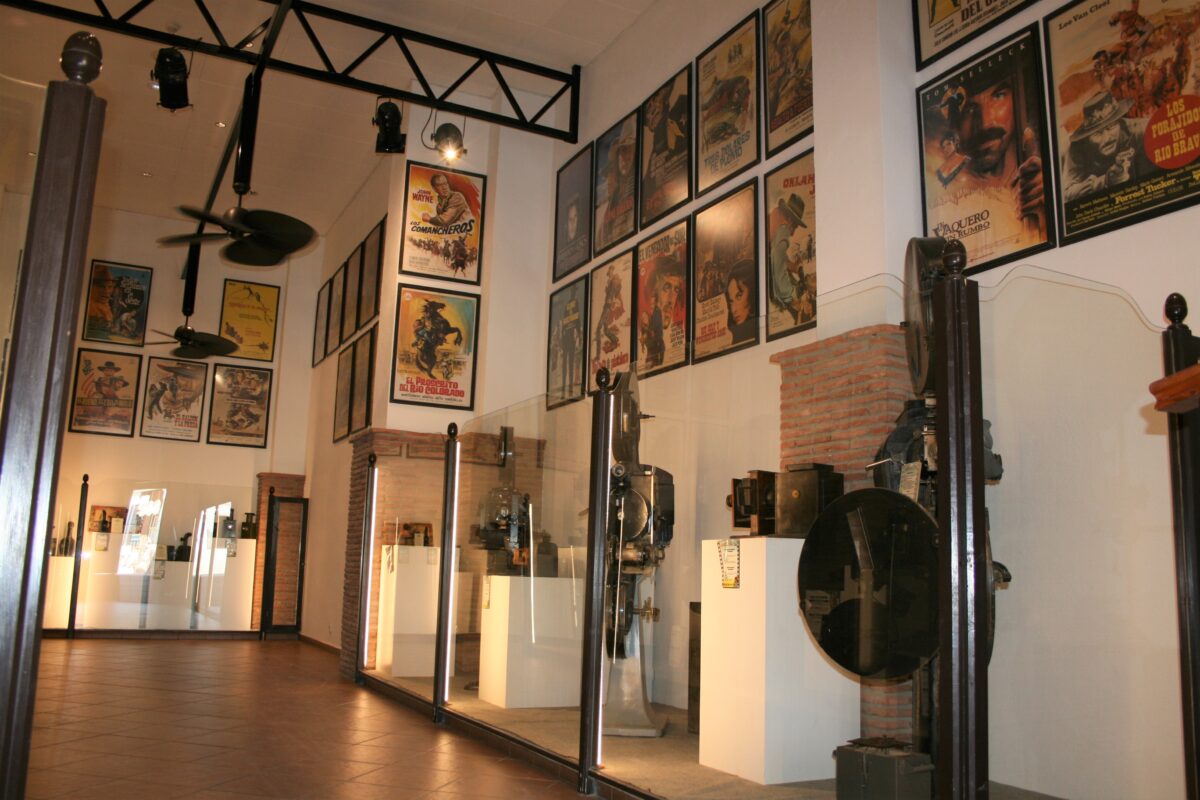
The immediate novelty this summer is the renovation of the three museums in the Western Village area: the cinema museum, the carriage museum and the vintage car museum.

The pioneer was the cinema museum, one of the best in Spain in terms of original material. It has been modernised with large, well-lit posters in Spanish and English.

Before the end of June, the museum of western wagons will also be finished. To which will be added the illustrated history of Oasys MiniHollywood from its origin in 1974 until 2023.

In addition, the new vintage car museum area will be inaugurated, with cars such as the Seat 600 or the Ford Bus 17.

These three museum buildings are a great complement to the theme park and the zoological reserve, making Oasys MiniHollywood the largest park dedicated to the American West in Andalusia, in southern Spain.


3-1200x1613.jpg

12 junio, 2023 AnimalsNews0

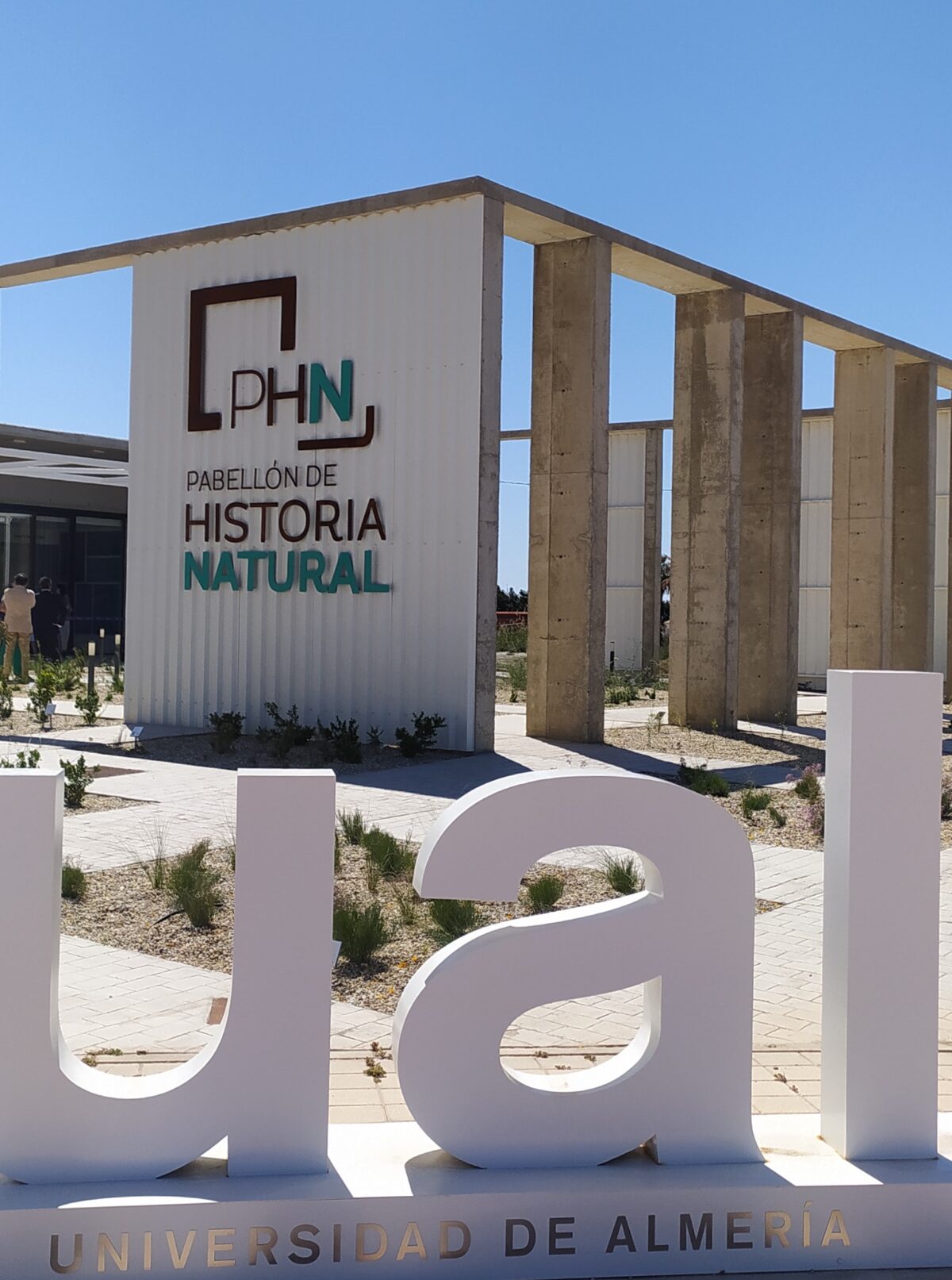
Last Friday 9th June was the inauguration of the Natural History Pavilion, located opposite the Technical Scientific Building V of the University of Almeria.

The event was attended by local authorities and businessmen, including José María Rossell Recasens, founder and president of Senator Hotels & Resorts. He was representing Oasys MiniHollywood theme park and Aquarium Costa de Almería, which have contributed to the achievement of this space through the transfer of resources and funds for many years.

The museum will be a living space that will host numerous outreach activities and school workshops, as well as conferences and travelling exhibitions to achieve a scientific and educational dissemination for the whole society.

The Natural History Pavilion aims to become not only a cultural reference for the university community and Almeria’s society, but also a tourist reference for the whole province.

The ground floor has space for flexible exhibitions, which can also be converted into teaching laboratories for educational purposes. It currently has 1.500 specimens of fauna, flora and minerals on display.

This space is currently focused on the natural environmental resources of the province of Almeria. With an outdoor area with different plant species, both on the ground and in height, and climbers that will allow the nesting of birds and promote biodiversity in the area. In the future, the exhibitions will be extended to other parts of the Peninsula or the world to learn about the different contemporary ecosystems.

Oasys MiniHollywood has supported this project from the beginning, working closely with both the University of Almeria and CECOUAL, pursuing scientific dissemination and the Conservation of Species and the Environment.


1682173402763.jpg

24 abril, 2023 AnimalsNews0

AmBioblitz 2023

On April 21, the AmBioBlitz Biodiversity marathon event held at the University of Almería, took place for another year with the participation, as every year, of the Oasys MiniHollywood theme park.

Both the Department of Education and the Department of Conservation of the Oasys park were present at this event, holding a workshop with students from the different schools in the province of Almería.

In the workshop called ¨Feather and Flight¨ a presentation was made on the ¨in situ¨ Conservation Project of the Ganga Ortega (Pterocles orientalis) carried out by the Oasys MiniHollywood Park, the Junta de Andalucía and Olivos Araújo, which with the captive breeding of this critically endangered species in the province of Almería, tries to increase the number of specimens of this precious species doomed to disappear due to the action of man and destruction of its natural habitat, for a possible release and reintroduction in the habitat from which they originate under controlled conditions after an acclimatization process.

The university campus hosted one of the largest science events in the province, where CECOUAL, in joint collaboration with different researchers, environmental professionals, students, as well as Oasys MiniHollywood, tried to teach the public the different ecosystems and their species.

The coordinators of the Department of Education explained to the students the entire process of breeding, feeding, nest formation, plumage, and the development process of the young animals until they became adults and were incorporated into the project.

The students also learned to differentiate the food necessary for the correct development of the birds, the preparation of their nests, and the difficulty of obtaining food in the wild.

One of the fundamental pillars of the Oasys MiniHollywood Education Department is education in the Environment and the Conservation of species, something that constitutes an essential task for the survival of Biodiversity. At the Oasys MiniHollywood park we have more than 80 captive breeding programs for threatened or critically endangered species.

Once again, Oasys MiniHollywood participates in the cultural and educational development of the province of Almería.


Bebe-Asno-somali-1200x1600.jpg

10 abril, 2023 AnimalsNews0

With fewer than two hundred in the wild, Somali wild asses are on the brink of the abyss. Critically endangered in its native habitat due to poaching and overexploitation of its habitat by man, this precious species is dying in the wild. The few specimens present in the wild are distributed throughout Eritrea, Somalia and Ethiopia, and it is extinct in Sudan and Egypt.

For this reason, the Captive Breeding Program in European Zoos, including Oasys MiniHollywood, is of vital importance for the Conservation of the species.

In Spain, only four institutions participate in the EEP (Conservation Program) for this species, due to the complexity of its maintenance and the scarcity of available specimens.

The new  Somali Wild Ass baby (Equus africanus somaliensis) born in Oasys, a male, has been named Matumaini which means hope in Swahili, as it will be essential for the continuation of captive breeding and perpetuation of its species.

During the gestation period, which lasted almost a year, his mother had difficulties that made us fear for the baby’s life, but finally this precious specimen was born without complications, weighing around 30 kg.

He will remain with the mother for at least the first two years of life before the Species Coordinator finds a new destination for him with females with which he is not genetically related in order to have offspring and thus contribute to the perpetuation of the species.

Oasys MiniHollywood actively participates in the protection of endangered species, in more than 90 European endangered species programs in what is called «ex situ» Conservation, trying to guarantee the survival of these threatened animals.

Equally important are the «in situ» Conservation programs, carried out in the habitats of origin, with actions in International Projects of great importance that benefit all Biodiversity as well as critically endangered and most threatened species on the planet. .

With populations of wild animals dwindling mainly due to human action, habitat loss, poaching, and climate change, the work of Zoo Conservation, like ours, is the last barrier to the disappearance of species. The fundamental pillar where maintaining a stable and controlled genetics that will allow us to maintain healthy populations and the future possibility of reintroducing these animals in their original habitats.

Between 1 and 2% of amphibians, birds, and mammals have already gone extinct, and from now on it will only get worse. More than a million species of plants and animals are critically endangered.

For this reason, the birth of Matumaini at Oasys MiniHollywood has been an immense joy for the entire team of veterinary professionals, biologists and specialized keepers who work every day for the Conservation of animals and nature.


Congreso-Aiza2023-1200x1264.jpg

15 marzo, 2023 AnimalsNews0

On March 2-3 and 4, Oasys MiniHollywood participated in the annual congress of the Iberian Association of Zoos and Aquariums (AIZA) 2023 held in Gran Canaria at the Poema de Mar aquarium.

Under the motto PROMOTING CONSERVATION, the congress was dedicated to making visible the impulse that zoos and aquariums give to the BIODIVERSITY CONSERVATION CYCLE proposed by the International Union (IUCN) in its Strategy for the Conservation of Nature.

In the meeting of more than 100 professionals from different management areas of zoological institutions, they discussed, among others, the IUCN Reverse the Red movement, as well as the captive breeding and reintroduction projects of threatened species carried out by the institutions zoos belonging to AIZA, as well as the application of new technologies in the education departments of zoos and aquariums.

This year Oasys MiniHollywood has had a strong involvement in the development of the congress, since one of the park’s veterinarians, Javier Romera Mondragón, has been chosen as head of the AIZA Veterinary Group this year, and will be in charge of the development of the veterinary part of the next congress.

In addition, he has presented a clinical case of one of the animals from the Oasys park in the central exhibition hall, making known the work of veterinary care carried out in our zoological collection.

Carrying out these external presentations helps the continuous training and improvement of the education, research and veterinary departments of the zoos that are part of the association.

AIZA brings together the most important zoos and aquariums in Spain and Portugal with the purpose of strengthening relations between them, at a technical and educational level, as well as encouraging zoos to be centers for animal recovery and conservation, as well as environmental education.

In these annual congresses it is possible to unify criteria and that all zoos walk together towards the same objective of educating for and for the conservation of nature.

Like every year, Oasys MiniHollywood involved in the conservation of protected species and nature.


Feeding_Samburu_c_GZT_4-1200x900.jpeg

2 febrero, 2023 AnimalsNews0

Grevy’s zebras (Equus grevyi) are in serious danger of extinction. Less than 2,000 adults remain in the wild, in small protected areas in northern Kenya and southwestern Ethiopia.

In addition to the problems generated by the habitat destruction to create new farmland, hunting, poaching, and the increased human disturbance, they are facing a terrible ongoing drought in their feeding areas, so many animals are dying of thirst and hunger.

Oasys MiniHollywood has responded to the desperate call for help from the European Association of Zoos and Aquariums (EAZA), due to the high risk of losing the few individuals that remain in the wild, which would put an end to the conservation efforts carried out over the past two decades.

For five long years, Kenya has been suffering from persistent droughts, with the latter being the most severe as a result of increased temperatures caused by climate change. The situation for wildlife is serious.

Marwell Wildlife, as well as Grevy’s Zebra Trust, have been providing hay and water to these wild individuals over 16 months, supporting the survival of more than 700 specimens.

From Oasys MiniHollywood we have supported these huge conservation efforts carried out for the conservation of this species —which is running out of time— and the stabilization of declining populations. All this work to preserve Grevy’s zebras in the wild could be wasted if we stop feeding these few individuals.

For this reason, from Oasys MiniHollywood we would like to invite you to contribute, as far as possible, with a donation to purchase food and water for the endangered individuals, which can be made via the following link:


https://www.justgiving.com/fundraising/tanya-langenhorst


Thank you for your help!


turacos-cresti-rojos.jpg

27 diciembre, 2022 AnimalsNews0

Very close to these families from Calaos, in the immediate vicinity, we find the family of Tockus Alboterminatus. Smaller than the previous ones, but much more active and even aggressive at times (the male came to attack us), they have been one of the most difficult species with which to establish a relationship of mutual trust.

After quickly adapting to his new facility, the male began to court the female, giving her little «candy» in the form of mealworms, but she didn’t pay much attention to him, so the poor bird went into a depression that made her sick, losing all his tail feathers and with a high degree of anxiety and stress caused by reproductive frustration.

He began to lose weight and no longer wanted the «candy» that he brought him every day. They were hard days, even months. Worried because we didn’t know how to help him and with the anguish of not knowing if he would get it back.

While he was convalescing, the Tockus nasutus couple, in front of his facility, formed a large family with three beautiful chicks. This reality of another male courting his female, singing to her every day and bringing her treats, began to cheer him up again and whetted his appetite for life, gaining weight day by day, singing again in the mornings when I approached his facility and returning to come for the ¨sweets¨.

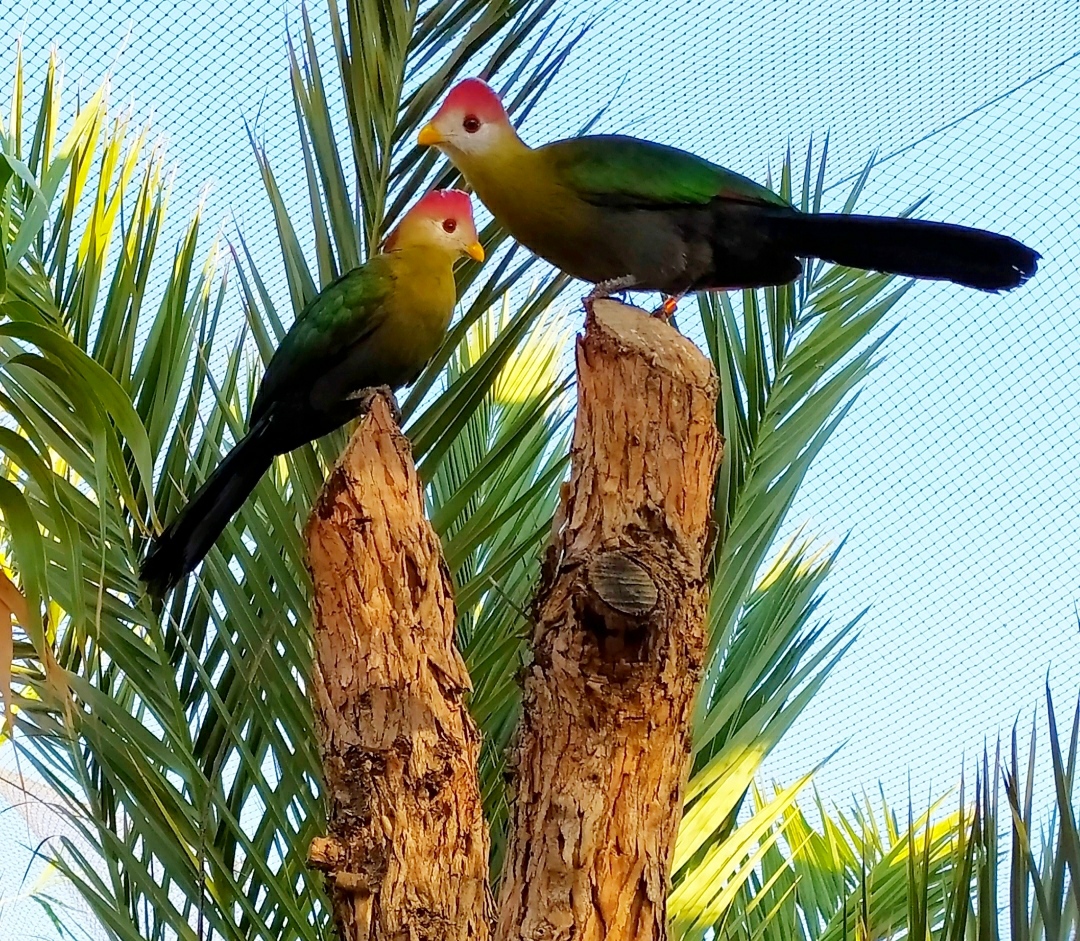
In addition, two steps away from them, the pair of red crested turacos managed to complete the incubation of their eggs, although in the end only one chick survived. Between the top of the palm trees and reeds, a small black earthquake with red feathers on its head, managed to reach adulthood after all the trouble it got into, including the excursion to the aviary of its neighbors the marabous, under the whistles from their frightened parents.

Finally, the Tockus alboterminatus male managed to court his female and both, with our help, reformed their nest with new amounts of mud, until the female felt comfortable to incubate inside.

Just like with the hornbills, our male, happier every day, carefully fed his female and her two chicks, until they were big enough to go outside.

In this same area under my care and supervision, I also enjoy and learn every day from our beautiful pair of Cape Curlews, who lay 2 eggs on the ground, surrounded by small stones that the couple chooses on the floor of their aviary. Both eggs will be vigorously protected by both parents and constantly guarded.

After the incubation period, and grateful for the first egg that we see hatch while the chick struggles to get outside and finally hatch, we receive it with great enthusiasm, moved by all the work and effort put in to get here.

My work involves a great dedication and a great effort, but it is always full of events that make my heart flutter in my chest and tears of emotion and joy in my eyes.

In this story, mine, I have listed some of the species that I keep, with which I share my days, my emotions, with which I learn lessons of progress, suffering and loss, but also joy and overcoming any obstacle along the way.

A story of hope, victory and illusion, which reminds me of the story of Cher Ami, the dove.

All the species that I house gave me parts of their lives without words, with their setbacks, challenges, sufferings and joys, in their times of solitude and with their partners, when they suffered from illness or lost their lives.

But day after day, in their little universe they teach me a lesson in perseverance and joy.

That is why I tell all of you that life is a unique and priceless gift, so enjoy every moment, let yourself be surprised by the beauty of those unique moments and be happy for everything that surrounds you.

Adina Zaha


Adina-yCalao1.jpg

20 diciembre, 2022 AnimalsNews0

Life is a flight (Part 1)

My name is Adina Zaha. I have been working as a bird and reptile keeper for over 12 years at Oasys MiniHollywood and I hope you like my experience. I love animals, but especially birds. I discovered this in my workplace, which I never get tired of and which I am passionate about every day. I am in charge of many species that are in danger of extinction or threatened in their native habitats.

Every day I see them feeding their mates, courting each other, building the nest and protecting their young when they have them. It is fascinating to see them, how they groom themselves, how they pamper themselves and give each other affection, to see the joy when I bring them their favorite «candies», but above all to feel their displays of affection when I enter their facilities. I couldn’t choose a favourite species, because there are so many, and I feel that each one of them shares something with me, both in difficult and pleasant moments.

After many years of experience, we have come to the conclusion that having birds in close cages or in front of each other helps them to learn by imitation. Restless birds have calmed down in the presence of tame companions, or even with calm pairs of a different species sitting in front of them, as is the case with our naturally nervous Ceratogymna atrata pair, which learned to be calm from the Bycanistes brevis pair, located in front of them.

Each species and each individual is different. A lovingly prepared nest may not be to the liking of one couple, but be the delight of another. For example, with our pairs of hornbills, without relieving them of their responsibilities, I help the males by preparing the mud and water to wet the ground, being a helping hand that helps them cover the hole where they will feed their females. It is truly a team effort, involving keepers, coordinators, vets and bosses.

During the 3-4 days that will take the male to close the holes where they can access and feed their females, we help them prudently. Generally our females lay 1 or 2 eggs and will remain inside the nest for a minimum of 110 days, while their males will guard the nest and feed them.

We, the team of keepers, make sure that the parents do not lack for anything, especially fruit (apples, grapes, kiwis…). We prepare very small pieces and accompanied by a good portion of special feed for the species, together with extra protein contributions such as meel worms and pinkies.

In the summer we make sure that they do not lack water, nor sufficient humidification, leaving the sprinklers on with small raindrops that stimulate them whenever necessary.

For this reason, on this trip I also want to talk about hope.

The days pass by and we reach the moment when we hear the chirping of chicks from the inside. Our birds have become parents. Males are more energetic when asking us for food, more concerned all the time to provide more food, putting their soul into it. And considering that the family has grown, we prepare double and even triple portions of food. To my delight, the males are more attentive, more trusting, treating us like a member of their family, moving closer to us requesting more food.

After these 110-120 days, the female begins to break the nest with the help of the male (or helped by us), making a small hole through which she emerges, leaving the young inside for a little longer. The joy of the parents at being reunited is evident: they sing, join their beaks and fly together in the installation.

And the hope and illusion of seeing them excites me and scares me at the same time. It is difficult to describe the feelings that overwhelm me, while I wait for «our babies» to come out, because we never know how many there may be. The whole team experiences different emotions and the joy is immense. We did it! And it’s wonderful.

Excited and silent, without moving, we see how the parents call them and encourage them to go outside. And one more year, they have become parents.


dia-abejajpg-1200x873.jpg

13 junio, 2022 AnimalsNews0

World Bee Day

On May 20 World Bee Day, Oasys MiniHollywood wanted to pay tribute to the most important pollinators on the planet, which are in danger of extinction, by planting several plant specimens in the area of ​​the insect hotel, including chamomile , rosemary, lavender, thyme and mint.

Due to human action, bees are in serious danger of extinction, and the work they do is being compromised, something that is essential for the survival of ecosystems.

The abilities of bees as pollinators are unparalleled, as 75% of the world’s crops depend on pollination. The use of agricultural systems by man, such as intensive agriculture, the use of pesticides and climate change are bringing them to the brink of extinction.

For this reason, at Oasys MiniHollywood we have called on everyone to plant plants in our gardens that can help these insects, such as lavender, sunflowers, blueberries, mint, chamomile, rosemary, thyme and mint.

Let’s put our grain of sand for the Conservation and Protection of bees.