[bt_section][bt_row][bt_column width=»1/1″][bt_hr top_spaced=»topSpaced» bottom_spaced=»not-spaced» transparent_border=»noBorder» el_class=»» el_style=»» responsive=»»][/bt_hr][/bt_column][/bt_row][/bt_section]

foto-grupo-2-1200x675.jpg

25 mayo, 2022 Animals0

International Antelope and Giraffe Meeting at Oasys MiniHollywood


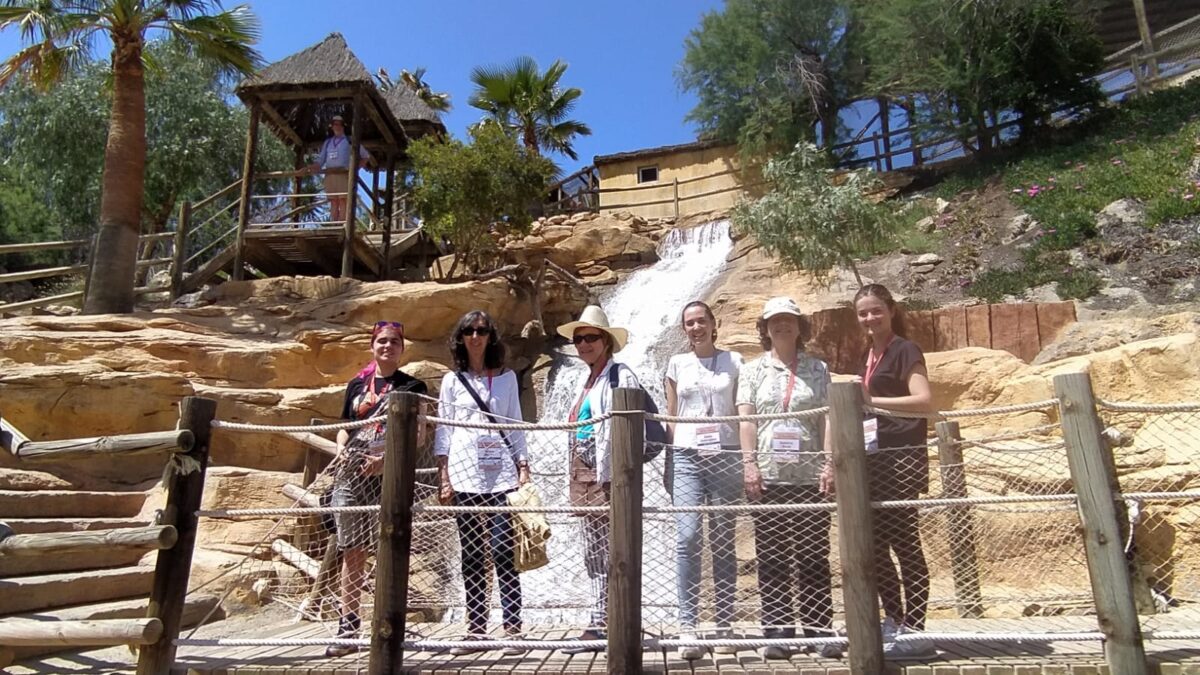
Last Friday Oasys MiniHollywood together with the CSIC of Almería organized the international meeting of experts on Antelopes and Giraffes from the different zoological institutions belonging to the European Association of Zoos and Aquariums (EAZA).

The first day of the meeting was held at the La Hoya Experimental Farm in Almería and on the second the development was carried out at Oasys MiniHollywood, where the present state of threat and danger of extinction in which a large number of ungulates and giraffes, as well as on the conservation and captive breeding actions that are being carried out for their protection.

Oasys MiniHollywood has a collection of 800 animals and more than 14 different species of antelopes and giraffes that are in serious danger of extinction, including some of them extinct in the wild, such as the Dorcas gazelle, Cuvier’s gazelle and gazelle Dama Mohor, so the Conservation and Captive Breeding work of the park is crucial.

The European coordinator of the group of experts, Dr. Sander Hofman, chaired the sessions where nutritional needs, behavioral problems, health needs and the educational work necessary to disseminate from zoological institutions, for the protection and conservation of these species were addressed. .

After the sessions, all the participants, accompanied by the park’s technical team as well as the coordinators of the captive breeding programs of the Arid Zones Experimental Station, took a guided tour of the different antelope and giraffe facilities.

Once again Oasys MiniHollywood supporting the Conservation and Protection of threatened and endangered species.


1651134269617.jpg

29 abril, 2022 Animals0

AmBioBlitz 2022


On April 22, Oasys MiniHollywood theme park participated in the AmBioBlitz event, the biodiversity marathon held at the University of Almería.

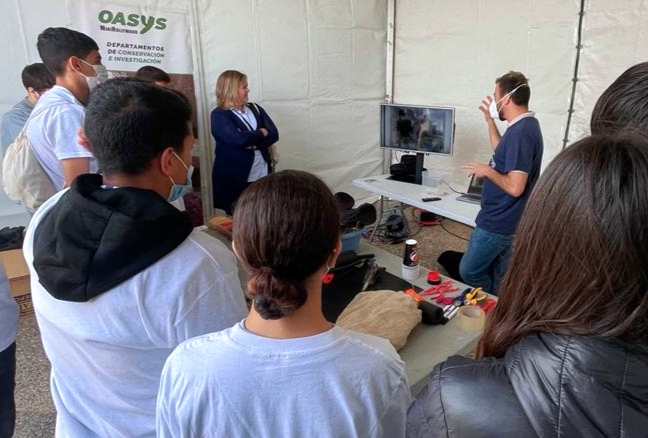
The Departments of Education and Conservation of Oasys MiniHollywood Park, as well as the Green Committee of Senator Hotels & Resorts were present at this event holding a workshop on the Eremita Project, which promotes the conservation and captive breeding of these endangered birds due to the action of man and the destruction of its natural habitat.

The university campus hosted one of the largest science events in the province, where CECOUAL, in collaboration with different researchers, environmental professionals, students, as well as Oasys MiniHollywood tried to teach the public about the different ecosystems and their species.

In the Oasys MiniHollywood workshop, called ¨Eremita Ibis», the different stages of the captive breeding process of these birds were shown, from the incubation of the eggs, the feeding of the chicks —with black clothing and a hat that imitates the form of the parents—, until the process of acclimatization to freedom and release into the wild.

It had great participation and the students were able to see the entire process summarized in the educational videos that showed the entire development process, from juveniles to adults, which are released into the wild in Barbate. All of that was explained by Javier Romera, veterinarian and breeding coordinator of Captive Bald Ibis Project at Oasys MiniHollywood Park.

The students learned to differentiate the foods necessary for the correct development of the birds, as well as the large amount of feed and insects they need throughout their life cycle, from chicks to juvenile and finally adults prepared for reproduction.

Like every year, the theme park participated in the AmBioBlitz event.

Once again, Oasys MiniHollywood participates in the cultural and educational development of the province of Almería


grulla-1200x678.jpg

15 marzo, 2022 Animals0

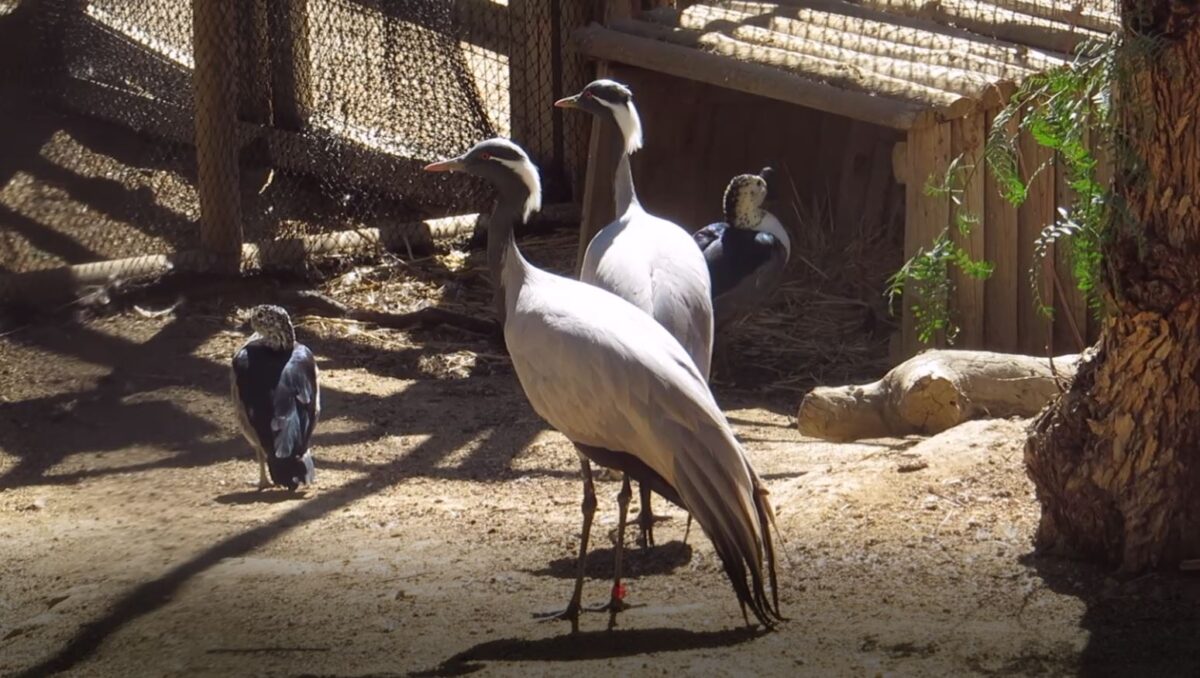
Damoselle Cranes at Oasys MiniHollywood


Smaller than the common crane, the demoiselle crane (Anthropoides virgo) has a more elegant appearance, a more attenuated caudal area, and a shorter neck and bill.

It is currently threatened in the wild, so the arrival of this pair at Oasys MiniHollywood is a ray of hope for the European Captive Breeding Program (EEP) for this precious species.

Although it has been extinct in Spain for many years thanks to historical dating and fossil records, its reproduction is assured at the end of the 20th century in marshes and lagoons in Andalusia, Extremadura and Castilla la Mancha. Currently in free life it is distributed between the continents of Asia, Northwest Africa and the western part of Europe.

It feeds on the green parts of plants, seeds, insects and other invertebrates. In summer especially, it can consume some small vertebrate and they reproduce in April-May. The female lays 2 greenish-gray eggs with brown and gray spots, which she incubates alone. The male takes care of her, briefly substituting for her. Chicks hatch after 27-28 days.

The demoiselle crane is one of the 15 species of crane existing throughout the world. Adult specimens are characterized by their ash coloration on the chest and wings and black on the neck. Another peculiarity of these animals is the intense orange color of their eyes, with white feathers that emerge from the rear corner of the eyelids to the back of the head.

Let’s hope that next spring love will emerge in our couple. Come see them at Oasys MiniHollywood.


asno-1200x900.jpg

7 marzo, 2022 AnimalsNews0

Birth at Oasys MiniHollywood

A new member of  Somali Wild Ass (Equus africanus somalicus) gallops through the savannah in semi-freedom with his mother at Oasys MiniHollywood.


This species in critical danger of extinction, has less than 200 specimens in the wild distributed in small areas of Eritrea and Ethiopia, so with the birth of this precious baby, it is contributed through the European Captive Breeding Program (EEP) so that this endangered species does not disappear.

Well adapted to arid climates, females give birth to a single baby after 12-13 months of gestation, being able to live with little food and even going days without drinking, with standing up to a loss of water of 30% of their body weight.

They dissipate heat thanks to their large ears, which also help them capture sounds from possible predators, from which they do not always flee, but sometimes manage to repel them by kicking and biting.

The males are very territorial and have a group of females that they protect and guard, while the less fortunate males live in groups of bachelors.

Help us find a name for our new Somali Wild Ass baby and come visit him at Oasys MiniHollywood.


img-9760-1200x805.jpg

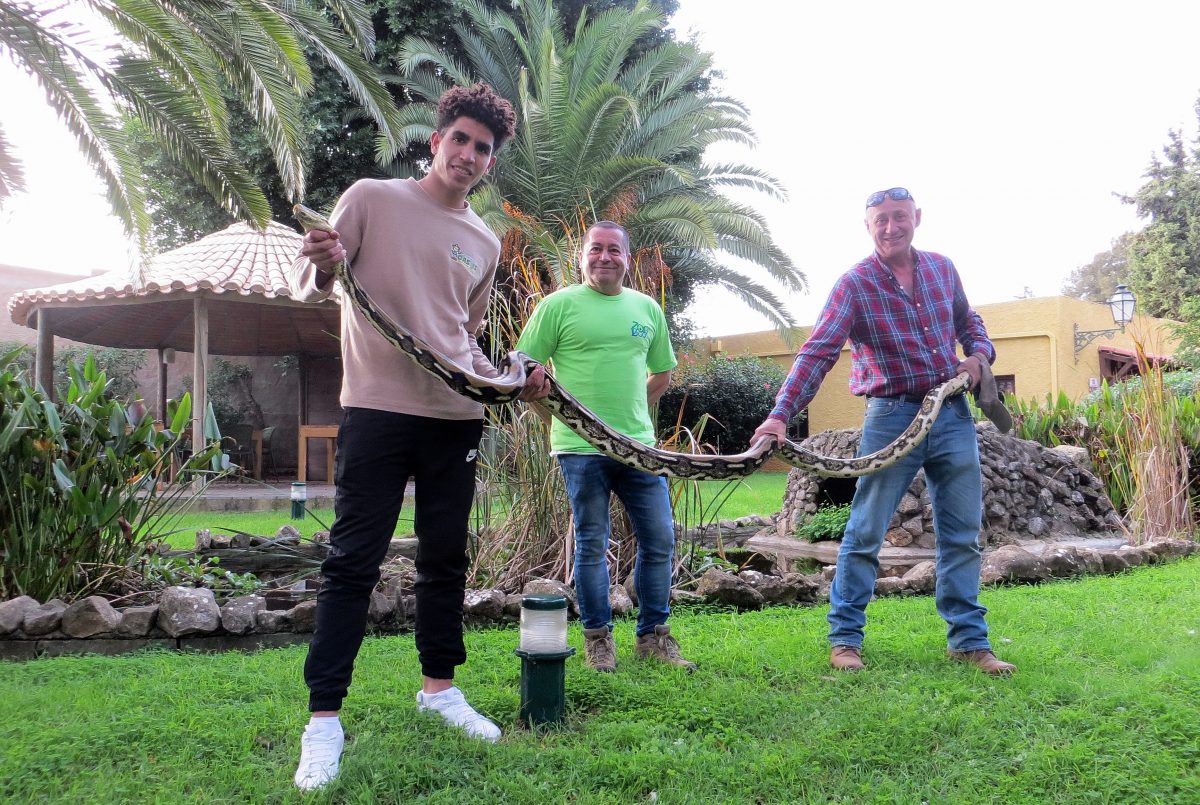
Trabajadores Oasys con serpiente

A few months ago, the Unit of the National Police Corps Attached to the Autonomous Community of Andalusia,  together with SOIVRE, rescued next to the garbage containers in Almería,  a specimen of reticulated python (Malayopython reticulatus) of almost four meters length, which was deposited at the Oasys MiniHollywood Park facilities for their care and custody.

After a few weeks in which the animal was recovering from some of the problems it had at the time of its rescue, such as the difficulty of shedding of skin, inadequate feeding and malnutrition, the Department of Conservation of the Zoological Reserve began to look for a suitable facility and enabled for the needs of this species that could house it, since one of the characteristics of these animals is the little or no ability to coexist with other species, so due to its large size it could not stay too long in our facilities.

Thanks to the Iberian Association of Zoo and Aquariums (AIZA) of which the Oasys Park is a part and after consulting with all the members of said Association, finally the Lagos Zoo was willing to host said animal and even to design and build a suitable habitat for it.

This zoo that is located in the South of Portugal, carried out the necessary works to be able to receive it and once the appropriate permits had been processed from the administrations of both countries, members of the Oasys Park undertook the transfer of said animal to their new Zoo.

Thanks to the close collaboration between the National Police Force, the Soivre of Almería, the Lagos Zoo and Oasys MiniHollywood, this impressive specimen now enjoys a good quality of life.


proyectolechuza.gif

12 julio, 2021 AnimalsNews0


For the fourth consecutive year, Oasys MiniHollywood has once again collaborated in the Lechuza Project, together with the CECOUAL of the University of Almería, the Society for the Study and Recovery of Almeria Biodiversity (SERBAL), the Group for the Rehabilitation of Autochthonous Fauna and its Habitat (GREFA) and the Rodalquilar Botanical Garden.

The common owl (Tyto alba) is included in the List of Wild Species in the Special Protection Regime at the national level, since its populations have been affected by the degradation of its habitat and the disappearance of sustainable agriculture, progressively increasing the area of ​​development of industrial agriculture and use of chemical products that in turn cause the disappearance of the natural prey of these birds.

The common owl was a common bird in the province of Almería and in recent years it has suffered a significant decline in its populations, disappearing in some municipalities.

For this reason, from Oasys MiniHollywood together with CECOUAL and SERBAL, this Project of Reintroduction of the Common Owl has been carried out for several years by means of the hacking technique (nest boxes), monitoring by cameras both inside and outside of these, the development of the chicks, their flight practices, feeding, and finally flying further and further away from the nest to look for food, until once established in their new territory, they will stop coming back to colonize new areas and reinforce the indigenous population.


In this way, Oasys MiniHollywood collaborates with the Lechuza Project to reinforce the population of this species in the province of Almería.


You can follow the live project here:

Twitch CECO UAL


225-baja-aquarium-manta-raya.jpg

28 junio, 2021 Animals0

A few weeks ago in one of our Stingray (Pteroplatytrygon violacea) specimens, weighing more than twenty kg that lives in the central tank of the Aquarium Costa de Almería (Roquetas de Mar), began to become visible a portuberance on the edge of the fin left side, which bothered him in his daily life as he was looking for surfaces to rub against that end.

Therefore, the veterinary team decided to prepare the material and surgical procedure to be able to remove this mass. In addition to the Aquarium’s aquarists and technicians, the intervention was attended by its veterinarian and director of Oasys MiniHollywood, Jose María Rodríguez Linde and the specialist dermatologist, Patricio López Jiménez.

The main complication was to have a support in which the animal, when it was out of the aquatic environment, could continue to breathe the oxygen contained in the water, through the gills.

Another important factor was to medicate that water with anesthetics that allowed the animal to be sedated during the entire time of the intervention to avoid any possible discomfort derived from the operation.

All this was achieved with two tanks, one medicated and the other with clean water without a sedative product for the recovery period after surgery.

Likewise, in the surgical intervention stretcher, in addition to having enough humidity so that the animal’s skin did not suffer dehydration at any time, a pumping system was available to provide water with anesthetic in the animal’s own oral cavity.

The operation was a success and within a few days she was already swimming in the central tank of the Aquarium, where he can be seen fully recovered.

Oasys MiniHollywood and Aquarium Costa de Almería, together for Animal Welfare.


oknacimiento-gemelos-gacela-cuvier-800x533-1.jpg

28 abril, 2021 Animals0


Oasys MiniHollywood signed last week the renewal of an agreement with the CSIC for the conservation of four threatened species: dama gazelle (Nanger dama mhorr), Cuvier’s gazelle (Gazella cuvier), dorcas gazelle (Gazella dorcas neglecta) and aruís (Ammotragus lervia sahariensis).

This project began in 2001, together with the CSIC’s Arid Zones Experimental Station (EEZA), with the transfer to our zoological reserve of four Dorcas gazelles and four Cuvier’s gazelles. Nowadays, the park already houses a breeding group of dama gazelle, a group of male gazelle dama, a group of male dorcas gazelle and two male Cuvier’s gazelle.

The objective of this agreement is the optimal conservation of threatened animal species and subspecies, especially those mentioned above. Thus, Oasys MiniHollywood offers the necessary space, food and optimal health care. In addition, the park will bear the necessary expenses to maintain the best conditions and security and, of course, any need that may appear to each individual.

This agreement will have a duration of four years, being able to be extended again for a maximum of another four years.

In addition to this, Oasys MiniHollywood participates in multiple other projects for the captive breeding of extinct or seriously endangered species, as in this case, so that in the future it will be possible to reintroduce them in their free environment.


img_6319-1200x800.jpg

20 agosto, 2020 Animals0

The Oasys MiniHollywood Park together with the Central Gardening team of Senator Hotels and Resorts, has inaugurated an insect hotel in the native flora zone of the park.

The main hosts of this type of structure are bees and solitary wasps, but some other insects such as ladybugs use it as a refuge.

The solitary specimens of bees and wasps, look for holes where to build small cells where their offspring will develop.

In the natural environment they usually use holes in dead wood, but due to the negative impact that humans generate in nature, eliminating the small natural galleries, holes, undergrowth, etc… that they would normally use in the environment, we also affect their development from a large number of species that depend on all this plant matter and therefore on all insectivorous species.

In addition, some of the species that are tried to protect with insects hotels are in danger of extinction, such as some of the wild bees. In the new hotel, just opened in Winter, before cames the health crisis, we want all the species housed in it to feel like a home.

As material, stones are often used for beetles and spiders, clay with soil and hay for osmias and drilled logs for wasps and bees. It is also good to add some pine cones for the wide variety of insects seeking shelter, such as ladybugs.

Oasys MiniHollywood always developing an enormous work of Conservation and Protection of species and the Environment. For this reason, we wanted to help the surrounding insects, creating a hotel to compensate for the lack of plant matter and natural holes, so that they can develop more easily.


ibis-eremita-3.jpg

26 febrero, 2020 Animals0

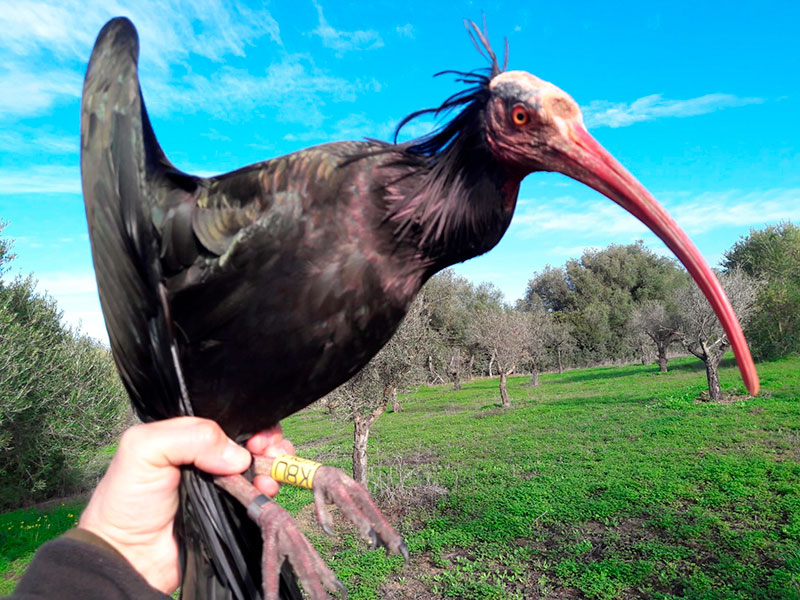
A few months ago we received confirmation that a Eremita Ibis chicken that had been born in Oasys Park in 2017, the female named Tabernas 17, had returned after her migration to Africa to the Colony of  Barbate Cliffs in the Cadiz population, where the Junta de Andalucía, the Jerez Zoo, Oasys MiniHollywood and other conservation organizations have been carrying out for more than 10 years, a Conservation project based on creating a stable colony in this location, since there are hardly any specimens in free life of this emblematic species.

The Eremita Project aims to increase the population of the colonies that already exist in the wild, as well as to achieve stable populations of these birds in areas where they disappeared a long time ago, such as on the Mediterranean coast.

Our female Tabernas had a GPS tracking equipment implanted, which has allowed her to be located during her migration to Africa through the wide area where she has been moving, as well as to be able to find her again in the colony, with the surprise of seeing her already paired.

After her capture, and after the necessary veterinary checks to verify that she was in perfect health and with the hope that it could be this year when she carried out her first laying and breeding with her partner, she was again released.

Oasys Minihollywood contributing small grains of sand in the Conservation of Species.

Good flight and good luck, Tabernas!