[bt_section][bt_row][bt_column width=»1/1″][bt_hr top_spaced=»topSpaced» bottom_spaced=»not-spaced» transparent_border=»noBorder» el_class=»» el_style=»» responsive=»»][/bt_hr][/bt_column][/bt_row][/bt_section]

felis-margarita3-1200x900.jpg

16 diciembre, 2019 Animals0

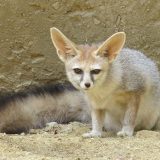
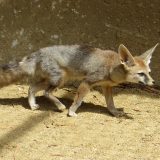
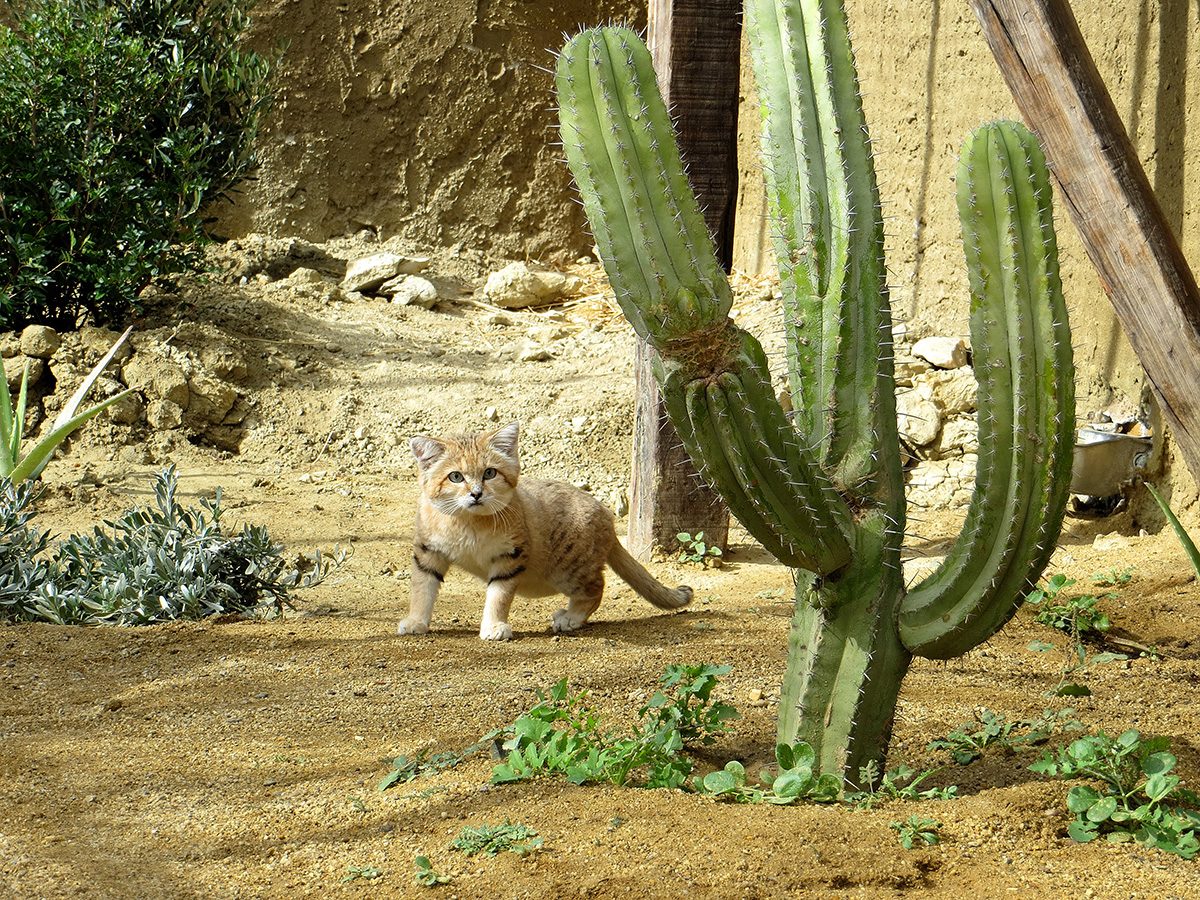
Oasys MiniHollywood is in luck. Recently, several species have joined our big family at our zoological reserve. More specifically, the newly arrived animals include several sand cats (Felis Margarita), several yellow-necked spurfowls (Pternistis leucoscepus), and a pair of Blanford’s foxes (Vulpes cana). 

All of these species come from different zoological reserves that Oasys MiniHollywood has collaborations agreements with.

Felis margarita at Oasys MiniHollywood

The sand cats (Felis margarita) come from a zoo in Lyon, France and from the Parken Zoo in Sweden. Its population in the wild is seriously threatened mainly due to human activity, poaching, habitat degradation, and competition with feral domestic cats. All of these factors have led to its disappearance in some of its places of origin.

Sand cats, along with the black-footed cat (Felis nigripes), are the smallest members of the Felis genus. These felines are the best adapted to life in the desert and they live in areas that range from Africa and the Arabian Peninsula to Pakistan.

According to the International Union for Conservation of Nature (IUCN), its current degree of threat is least concern due to a lack of precise data. However, it is believed that on the next census, they will be elevated to near threatened or vulnerable, like the Felis margarita margarita, a subspecies from the Sahara, and Felis margarita scheffeli, a Pakistani subspecies.

One peculiarity of the Felis margarita is that the sole of its paws are entirely covered in fur, which protects them from coming into contact with the burning desert sands. It is preferably active at twilight or at night and they stay hidden under bushes or among rocks. They have also been observed occupying the dens of other species, such as the fennec fox (Vulpes zerda), for example.

These small felines eat rodents, hares, birds, snakes, and insects, among other things. In addition to the pressure on their population caused by man, they are also preyed upon by jackals and birds of prey.

Oasys MiniHollywood is the only member of the European Associations of Zoos and Aquaria (EAZA) in Spain and the only member of the Iberian Association of Zoos and Aquaria (IAZA) which has this beautiful species and actively participants in the program for its conservation (EEP).

Yellow-necked spurfowl

After a journey of more than 1,350 miles from the Rotterdam zoo, three yellow-necked spurfowls (Pternistis leucoscepus) have arrived at Oasys MiniHollywood. These birds belong to the pheasant family and are originally from Somalia, Kenya, and other countries in east Africa.

The males sing a very striking song when they are in heat and their necks turn an intense yellow. They become fertile after one year of life and lay small numbers of eggs. Laying begins at the beginning of March and the eggs are incubated for around 20 days.

They have been introduced to the Mamili aviary, in the middle of the Okavango area, where they share the facilities with violet turacos, guinea turacos, and hamerkops. These three males have been together since their birth in the Netherlands. At Oasys MiniHollywood, we are searching for mates in order to breed this beautiful species in our facilities.

Blanford’s foxes from the Arabian Peninsula
Oasys MiniHollywood has signed an agreement with Arabia’s Wildlife Center, located in Sharjah, in the United Arab Emirates. Thus, some of the animals from our zoological reserve will travel to this wildlife center.

Likewise, a pair of Blanford’s foxes (Vulpes cana) from the Emirates has joined our collection. After a period of adaptation, they are now enjoying life in a well-deserved enclosure in the Small Carnivores area along with other species of foxes and felines. All of these animals are perfectly adapted to the climate of Tabernas.

With this last addition, Oasys MiniHollywood has become the only park in the Iberian Peninsula and indeed all of Europe that has this beautiful species of fox.

Come visit them at Oasys MiniHollywood!

calao-atrata3-1200x800.jpg

2 diciembre, 2019 Animals

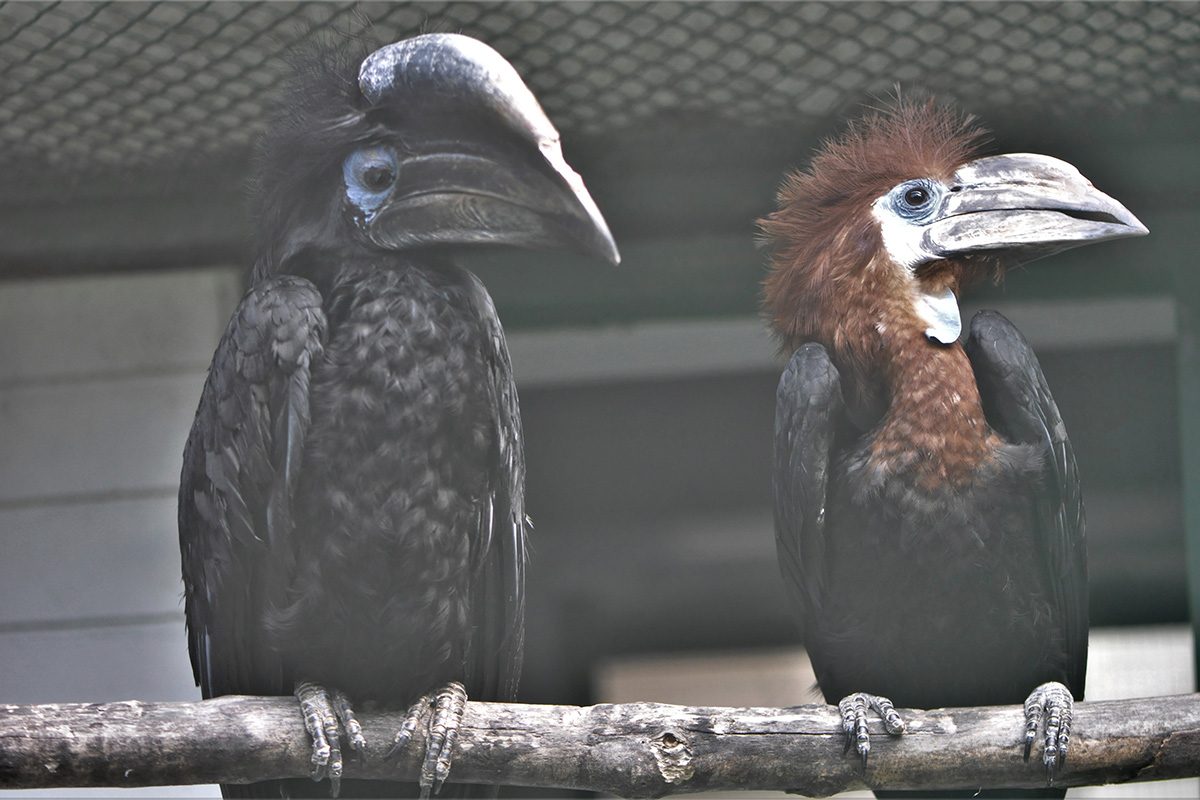
Our black-casqued hornbill (Ceratogymna atrata) has just been transfered to the Bojnice Zoo in Slovakia. The objective is to continue with the conservation work for threatened species and achieve reproduction with the female that the Bojnice Zoo already has.

After more than 48 hours of travel, the bird arrived at the facilities, where they performed a clinical veterinary examination to confirm that he was in perfect condition.

Following the quarantine period, he needed time to adapt to his new facilities. Once this was successfully completed, he was introduced to his future partner. The two were happy together from the very first moment. Next, they were given access to outside facilities, where they are together all the time. We are sure that our first Ceratogymna atrata specimen is in good hands and the family will soon grow larger.

The black-casqued hornbill (Ceratogymna atrata) is one of the animals that is most representative of our conservation work for threatened species, as it can hardly be found in the wild and there are no reliable data on this species. Thanks to this effort and commitment, the black-casqued hornbill family at Oasys Hollywood grows every year.

The Bojnice Zoo is part of EAZA (European Associations of Zoos and Aquaria), as is Oasys MiniHollywood. It actively participates in many conservation projects for threatened species. It is one of the leading specialists in the handling and care of birds such as, for example, the crowned hornbill (Tockus alboterminatus), the eastern yellow-billed hornbill (Tockus flavirostris), the black-and-white-casqued hornbill (Bycanistes subcylindricus), the northern ground hornbill (Bucorvus abyssinicus), the southern ground hornbill (Bucorvus leadbeateri), and the wrinkled hornbill (Aceros corrugatus).

This species is scarcely represented in European zoos despite the fact that species can hardly be observed in the wild. In fact, the International Union for Conservation of Nature (IUCN) has not granted it any degree of threat. Our specimens form part of the European Endangered species Programme (EEP).


shutterstock_228341731.gif

2 diciembre, 2019 Animals

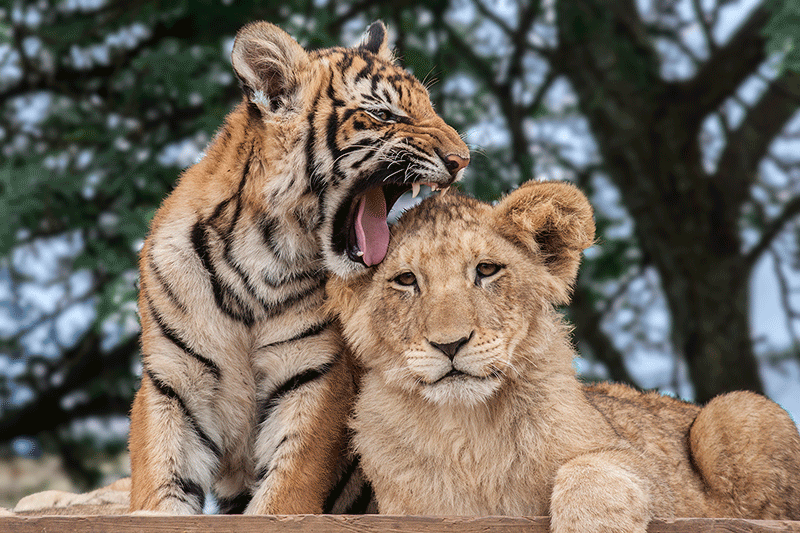
Lions and tigers are two of the five species that make up the Panthera genus, which form part of the feline family. The other three are leopards, jaguars, and snow leopards. In this article, we’ll tell you the main differences between lions and tigers, the two most ferocious creatures in the animal kingdom. 

There are six subspecies of tiger (Panthera tigris), of which the Bengal tiger represents 80% of the total population of tigers. All of them are found on the Asian continent. On the other hand, there are also six species of lion (Panthera leo), one of which lives in Asia.

Differences in size

Tigers are the largest felines in the world and can reach up to 12.5 feet in length (including the tail) and up to 650 pounds. On their part, lions tend to weigh between 330 and 550 kilos and measure between 6.5 and 11 feet. Interestingly, lions have longer tails than tigers. 

Habitats of Lions and Tigers

Lions come from Africa whereas tigers are native to Asia. However, until relatively recently, lion habitats used to include a large part of Eurasia, from Greece to India. In fact, there is still a subspecies of lion called the Asiatic lion, which is also known as the Persian or Indian Lion (P.l. persica), in the Gir Forest in western India. It is in severe danger of extinction.

The lion lives on the large grasslands and open plains of the African savanna, from the east of the continent to Senegal and from south of the Sahara to South Africa, except for the jungles of the Congo. 

The tiger lives from Siberia to southeastern Asia, including India and the island of Sumatra. However, its population is very dispersed and it is calculated that there are around 3,800 individuals currently living, down from the 100,000 there were at the beginning of the 20th century.  For this reason, the International Union for Conservation of Nature (IUCN), considers this species to be in danger of extinction

On its part, lions have also suffered a severe setback throughout the 20th century. Even so, it’s in a better situation than the tiger and today it is calculated that there are between 16,500 and 47,000 individuals. Still, the lion is cataloged by the IUCN as being vulnerable because its population has continued to decline in recent decades.

Lions and tigers as hunters

Both animals are carnivores and skilled hunters. In fact, they form part of the largest group of predators in the natural world. However, whereas tigers hunt alone and at night, female lions hunt in groups and during the day and night. 

To give you an idea, female lions need to eat an average of 11 pounds of meat per day and male lions an average of 15 pounds. In addition, in the case of lions, the females are the ones who hunt in groups and bring food to the males, who limit themselves to eating and protecting the pack. Likewise, on many occasions they rob prey from other animals such as cheetahs or leopards.

Lions can reach speeds of 50 miles per hour whereas tigers can reach slightly faster speeds of up to 55 miles per hour. Lions’ diet includes gazelles, zebras, impalas, giraffes, and antelope, among other animals. In turn, tigers prefer wild boar, deer, and buffalo, although they also eat fish, birds, apes, and reptiles. 

Tiger and lion reproduction

Tigers and lions have very similar reproductive characteristics, given that both reach sexual maturity at between 2 and 4 years of age. Lion gestation lasts between 100 and 110 days and once the offspring are born, they take some time before being introduced to the pack.  

Tiger gestation, on the other hand, lasts around 103 days and they tend to have between 2 and 3 young. The mothers spend at least 3 years with the offspring until they reach sexual maturity.

Fun facts about tigers

Tigers are good swimmers and like to spend time in the water. Therefore, they usually live by rivers or marshy areas. 

Another fun fact about tigers is that their stripes are unique to each individual, so their pattern is like a fingerprint that is marked on their skin, not just their fur. 

The tigers’ well-known jump can reach up to 16 feet in height and 33 feet in length thanks to the boost from its muscular paws. This makes it one of the highest jumping mammals, only surpassed by the puma. 

Fun facts about lions

Without a doubt, the most notable characteristic of male lions is their majestic manes.  Despite what you may think, lions have a relatively short life expectancy. In the wild, females do not tend to live beyond 14 years and males beyond 8, although in captivity they can live for up to 20 years. In addition, it is the only species in the Panthera genus that lives in packs.

Another of the most interesting facts is that lions are one of the biggest “sleepyheads” in the animal world; they spend around 13 hours a day sleeping

If you liked this article, you may be interested in learning about the difference between the cheetah and the leopard. At the Oasys MiniHollywood zoological reserve, we have various species of felines, including lions, tigers, cheetahs, leopards, and even a subspecies of Siberian tiger which is in severe danger of extinction. We hope to see you soon!