[bt_section][bt_row][bt_column width=»1/1″][bt_hr top_spaced=»topSpaced» bottom_spaced=»not-spaced» transparent_border=»noBorder» el_class=»» el_style=»» responsive=»»][/bt_hr][/bt_column][/bt_row][/bt_section]

shutterstock_238810516-1.jpg

2 diciembre, 2019 Western

The people who are known as American Indians are the indigenous people of North America. Despite what you may think, the native people of the United States were divided into dozens of ethnic groups with very different customs, languages, and lifestyles. The Apache, Sioux, and Cheyenne are some of the most well-known tribes thanks to their portrayal on the silver screen, but there were many more.

History: Why were Native Americans called Indians? 

When Christopher Columbus went ashore in Guanahani (Bahamas) on October 12, 1492, he thought he had arrived in India. The navigator had set off two months and nine days earlier from Puerto de Santa María, in Spain, in search of a new route to India by crossing the ocean.

It wasn’t until 15 years later that the new colonizers discovered that these lands, where neither gold nor spices were plentiful, was not India, but rather another continent that they named America. Hence, during the first contact with American indigenous people, the colonizers called them Indians.

American Indian Tribes 
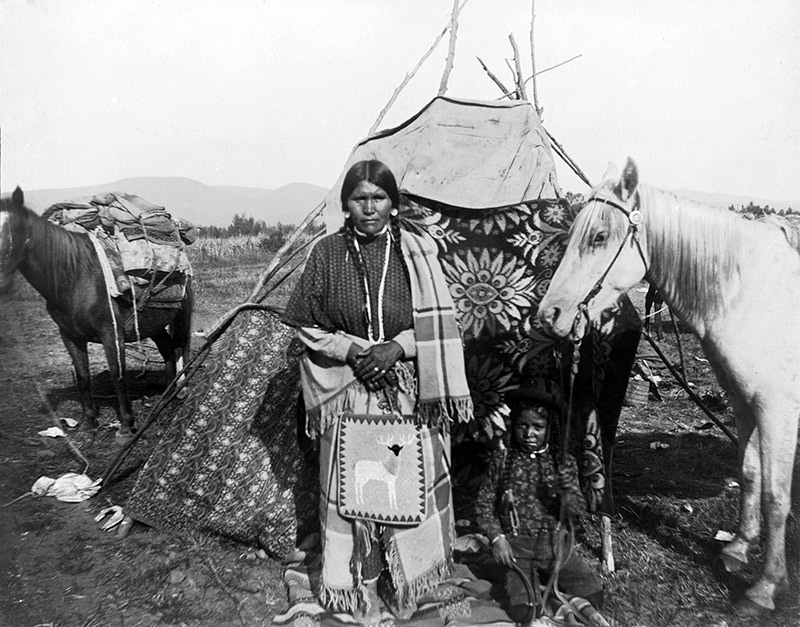
Some of the most well-known American Indian tribes are the Apache, the Sioux, the Cherokee, and the Cheyenne. There are also many others, such as the Blackfeet, the Arapaho, and the Navajos. They have a significant population and have played an important role in the history of the United States.

Sioux

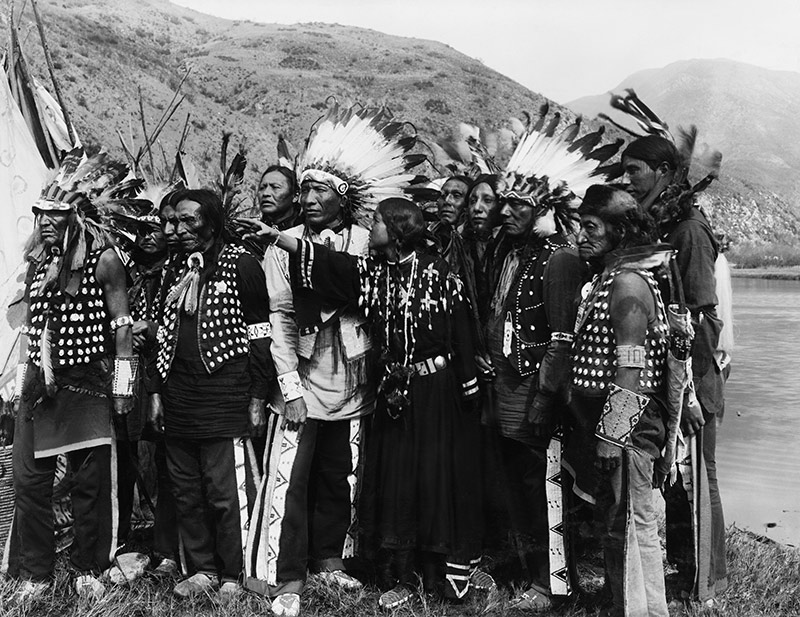
The Great Sioux Nation live on the Great Plains of the United States. They are divided into various clans or tribes: the Lakota, the Nakota, and the Dakota, each of which speak a different variety of the Sioux language. In contrast to other indigenous peoples, the Sioux were nomads and experts at hunting bison. They moved around following the buffalo herds and lived in the legendary tipis, cone-shaped dwellings covered in bison skin. When the colonizers again introduced horses to America, the Sioux soon dominated them and became known as excellent jockeys.

Apaches 

The Apache are a group of indigenous tribes who live in the arid lands of Arizona, New Mexico, Texas, and northwestern Mexico. They were hunters, ranchers, and farmers. A large part of their traditional diet is based on corn, beans, sheep, and goats. Like the Sioux, the Apaches put up great resistance to invasions from the times of the Spanish colonizers. Today, the Apache are the most numerous Native American tribe and is estimated to have a population of approximately 57,000 people.

Cherokee

The Cherokee are an indigenous people who used to live on the southeastern coast. In ancient times, they migrated from the Great Lakes region to south of the Appalachian Mountains and used to live in what is today the area from North Carolina to Alabama. The large Cherokee population lived off of hunting and growing crops such as corn, beans, and squash. Unfortunately, they were later forcibly moved to Oklahoma. 

Cheyenne

Like the Sioux, the Cheyenne live on the great plains, but in the northernmost area, from the Black Hills of South Dakota to Colorado. They are divided into groups and were allies of the Arapaho and the Sioux. The Cheyenne participated alongside them in important battles such as Red Cloud’s War (1866-1868) and the Black Hills War (1876-1877).

Customs of the American Indians 

American Indians are generally known for having the spirit of warriors, being good hunters, and having great respect for nature. Nevertheless, their customs and languages are very different among the various tribes. 

It is calculated that when the Europeans arrived to North America, there were more than 300 different indigenous languages among the tribes. Of these, more than half have disappeared and some of those that are still spoken are at risk of extinction. 

One of the most popular American Indian customs is group dances, rituals that are done for a variety of purposes, such as asking for good luck from mother nature. Dances include the bison dance, the rain dance, or the famous sun dance, which was done to ask for good health. Tribe leaders directed religious life and carried out different rites and ceremonies, some of which included fasting and offerings.

Another of the most important customs was a pow-wow, which are meetings of the native tribes of North America. They are still held today.

Clothing of the American Indians

Like their customs, each tribe’s clothing was different. In general, in the majority of native tribes, the men wore breechcloths and protected themselves from the cold with pants and deer and bison skin. On their part, women tended to wear leather dresses as well as tunics which covered their skin.

For ceremonial acts, some tribes wear special tunics decorated with feathers, the skin of animals such as hedgehogs, and many other accessories and decorations. 

The Most Famous Native American Chiefs
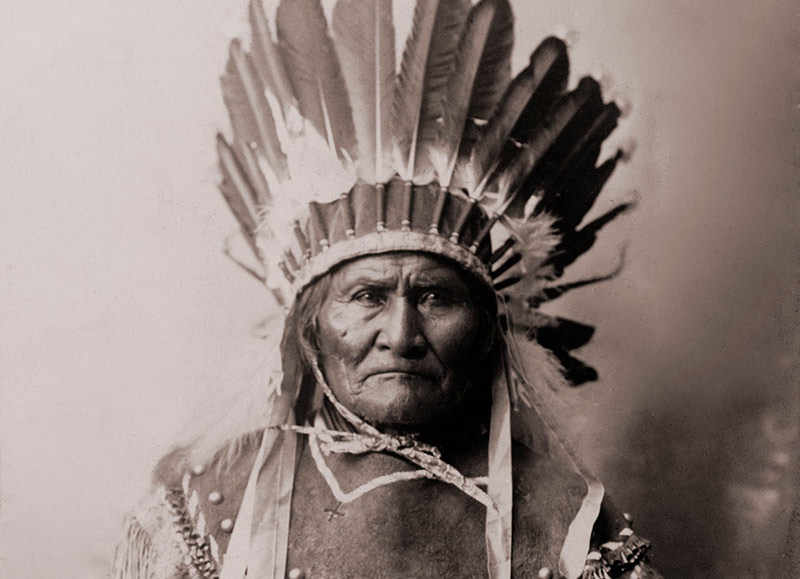
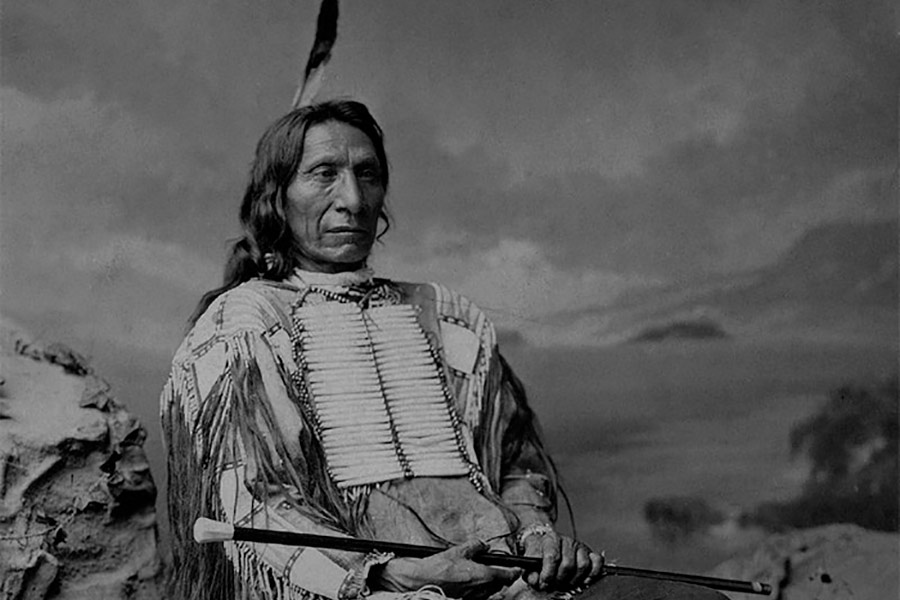
Some of the most famous Indian chiefs in the West include Sitting Bull, chief of the Sioux who, along with Crazy Horse, another Sioux leader, led the famous Battle of Little Bighorn. Red Cloud, who was leader of this tribe before them, was another of the most notable Indian chiefs who fought in what is known as Red Cloud’s War. As a result of this war, the Treaty of Fort Laramie was signed. 

As can be seen in United States history, the Sioux were one of the tribes that was most often at war. There were also notable Indian chiefs from other tribes such as the Geronimo and Cochise, from the Chiricahua clan, which belonged to the Apaches, or the man known as Chief Joseph, from the Nez Percé tribe. 


If you are interested in the Far West, don’t miss out on a visit to Oasys MiniHollywood! Enjoy cowboy shows, cancan dancing, and authentic Western movie sets in addition to a zoological reserve with more than 200 different species.

destacada-1.jpg

2 diciembre, 2019 Western

When the North Americans began to invade Native American territory and tried to force them onto minuscule reservations that were not very fertile, the leaders of these tribes opposed. This triggering fierce wars, many of which were recreated by Hollywood in the movie theater. Today we bring you a list of the most famous Indian chiefs in the West who put the United States government in check.

Sitting Bull (Tatanka Iyotanke)

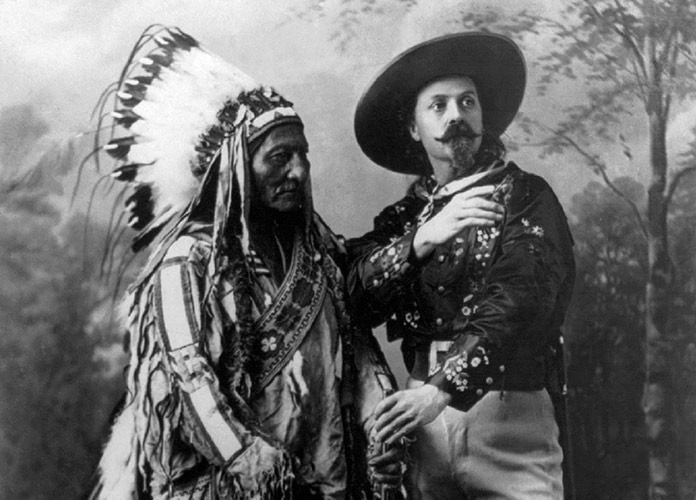
Sitting Bull is one of the most well-known American Indian chiefs for having led the most famous battle between Native and North Americans, the Battle of Little Bighorn on June 25, 1876. Sioux and Cheyenne warriors defeated the Seventh Calvary under the command of General George Armstrong Custer.


In 1868, several Sioux chiefs, including the famous Red Cloud, signed a peace treaty with the US government. The Treaty of Fort Laramie established the Black Hills Reservation in Dakota territory. However, Sitting Bull did not accept the agreement and continued attacking forts in the area of Missouri. Despite his victory at Little Bighorn, in 1877 he had to flee to Canada with a few thousand followers from his tribe, but the lack of food and harsh conditions forced them to return after a time. Sitting Bull surrendered and the government sent them to the Standing Rock Reservation. 

Later, the Sioux leader left that place for a time to join celebrity Buffalo Bill‘s curious show. The spirit dances that they did on the reservations to throw out the white men roused the suspicions of the United States government, which sent men to stop them. After he refused to be illegally arrested, he was shot in the chest. In the ensuing chaos, his son and three hundred members of his tribe were also killed.

Crazy Horse (Tasunke-Witko)

Crazy Horse was another Indian leader who fought alongside Sitting Bull in the Battle of Little Bighorn. He allied with the remaining Native American chiefs to expel the whites from their territory. It was he who killed General Custer, a scene that has been portrayed in numerous movies such as They Died with Their Boots On, Fort Apache, The Great Sioux Massacre, or Winchester 73. 

Tasunke-Witko was the chief of the Oglala, one of the Sioux tribes. At 16 years of age, he adopted his father’s name and fought in his first battle. In the Treaty of Fort Laramie, signed by chief Red Cloud, the Indians renounced a part of their territories but received others, among them the Black Hills, a sacred site for Native Americans.  

However, the problems began when rumors started to fly about the existence of gold at that place. Many settlers started to move to the area and despite attempts to buy the territory, the Indians refused. Crazy Horse, just like Chief Sitting Bull, refused the Treaty of Fort Laramie and declared war on the Americans. He did not die on the battlefield, but rather was treacherously assassinated by a North American soldier who stabbed him with a bayonet in the back. 

Red Cloud (Makhpyia Luta)


Red Cloud was a respected Sioux Indian chief and the only one who won a war with the United States of America, the so-called “Red Cloud’s War,” which took place between 1866 and 1868. The Sioux, along with the Cheyenne, defeated the North American Army and the government was obligated to sign the Treaty of Fort Laramie, in which it gave up forts that it had built on the Bozeman Trail, which crossed Lakota territory in this Amerindian nation. In turn, it granted them their own autonomous lands. 

Although the US did not keep its word, Red Cloud did not participate in the later Great Sioux War, led by Sitting Bull and Crazy Horse. Despite the famous battle of Little Bighorn, since then, the Native Americans lost what little they had and hunger made the tribes give up little by little. 

First it was the Cheyenne and later, the leaders Crazy Horse and Sitting Bull. The Sioux were reduced to living in uncomfortable spaces which were spread out and not very fertile. This made them dependent on government aid. In contrast to the other leaders, Red Cloud died of old age. He always tried to negotiate a better situation for his people, although he was unsuccessful.

Geronimo (Goyathlay)

Unlike the three other great Sioux chiefs, Geronimo belonged to the Chiricahua tribe of Apaches. He was born in Arizpe, in the state of Sonora (Mexico), and was a nightmare for both the Mexican and the American governments. In fact, at the beginning, he fought to get revenge for the murder of his wife and daughter at the hands of the Mexicans.  

He is one of the most controversial Indians, as many point to the fact that rather than a defender of Native Americans from the oppression of white people, he was violent and a looter. In any case, he carried out several attacks to liberate the Apaches from the reservations.  

Between attacks, Geronimo and his men would take refuge in the Sierra Madre mountains, in the Mexican state of Chihuahua. Following a period of resistance, Geronimo gave up and was transferred to a reservation in Oklahoma, where he lived peacefully to 79 years of age.

Cochise (Shi-ka-She)

Like Geronimo, Cochise was the chief of the Chiricahua Apaches. In fact, he was his predecessor. This Amerindian tribe lived between the territories in the south of the United States (New Mexico and Arizona) and the north of Mexico (Sonora and Chihuahua). Apaches and settlers had lived together for years without any incidents until Cochise was wrongly accused of kidnapping a settler’s daughter.

Cochise formed an alliance with his father-in-law, Mangas Coloradas, and with him, he started the famous Apache Wars, which kept the United States in check (1861 -1886) in Arizona Territory. In the end, the United States government reached an agreement with them so that they kept a reservation in part of the lands of their forefathers, between the Chihuahua mountains and the Sulphur Springs Valley.

Chief Joseph (Hin-mah-too-yah-lat-kekt, or Thunder Rolling Down the Mountain)

One of the most noble Indian chiefs in the West was Chief Joseph of the Nez Percé tribe. This official name comes from the French “nez percé,” which means pierced nose, a reference to these peoples’ custom of wearing a piercing in the nose.  

The Nez Percé lived around the Wallowa Valley, between the states of Idaho, Oregon, and Washington, a very fertile place that the North Americans soon started to covet. Although Chief Joseph was peaceful and tried to avoid war, the government violently forced them to move to reservations.  

Chief Joseph and his tribe had no other option than to rebel in 1877, which led to a bloody conflict in which few more than 400 Nez Percé survived. Although they won some battles, they did not win the war. After, they were taken to a reservation where many died of hunger and thirst. 

Chief Joseph never stopped writing letters the US government, demanding the right, like all other United States citizens, to live where they wanted to live. Finally, in 1880, the fewer than 300 surviving members of the tribe were allowed to return to the Northwest, but only to the Colville Reservation in Washington, not to the Wallowa Valley.


vaqueros.jpg

2 diciembre, 2019 Western

Some of the most famous clothing in film is that of the American cowboys. Popularized and exaggerated by Hollywood Westerns, Wild West cowboy clothes have their origin in the clothes of Mexicans and Spanish conquistadors. 

Western wear 

Cowboy outfits are made up of a series of essential items that arose from the practical necessities of the job and the harsh environment that they lived in in the West. These clothes have made the cowboy outfit into a classic look.

Cowboy hat 

The cowboy hat is probably the most iconic cowboy item. They have a tall crown and have an extremely wide brim that is slightly bent on the sides to protect cowboys from the sun. Most have a chin strap to keep it from blowing away in the wind.

The cowboy hat arose in Mexico which, in turn, had its origins in Spain and the tradition of equestrianism that traveled to the New World. Remember that before the Mexican-American War, southern US states such as California and Texas were part of Mexico.

The most famous hat was called the Boss of the Plains, created in 1865 by John B. Stetson. It gained worldwide fame in cowboy movies

Bandanna 

A bandanna is a type of handkerchief that cowboys used to protect themselves from dust when they rode or when there was a sandstorm. They also used them to protect their necks from the sun. Its role was eminently practical.

Boots 

Along with a hat, boots are the most characteristic item of clothing for Western cowboys. It was also brought over by Spanish jockeys.

They are fairly tall to protect the legs and had a pronounced toe, high heels to fit nicely into stirrups, and sometimes included spurs. The original cowboy boots were made of cow leather, but they are also made of other species such as snake, alligator, or ostrich. 

Chaps 

These were invented by Spanish settlers to protect the legs from large bushes, thorns, and barbed wire when they rode. They were later adopted by American cowboys. They tend to be made of leather and their length varies by region. The original chaps worn by the Mexicans consisted of a leather blanket that was held up with a belt and which covered both legs. 

Jeans 

All traditional Wild West cowboy outfits use jeans as the pants. This material was made popular at the end of the 19th century. Likewise, it was common to wear denim shirts.

Gloves 

Another less flashy but very practical accessory for cowboys is gloves. They are usually made of soft, flexible leather in order to comfortably carry out tasks in the field, whether dealing with barbed wire or weeding.

Lasso

Another typical item seen in Western movies is the lasso. This is a tough rope which used to be made of leather that is used to capture animals. It has a slip knot on one end. Today it is also used in rodeos and handling it is a true art. 

Spurs 

Though not all boots have spurs, they are a symbol of the cowboys. They are small serrated wheels in the shape of a star that are attached to the heel of the boot. They serve to direct the horse’s movements.

Revolver 

As you can see in American Westerns, a true cowboy isn’t anybody without his revolver at his hip. It was often used to fight duels and was tied to his belt. In real life, cowboys had a gun mainly to protect the cattle from potential predators. Nowadays, they mainly use rifles.


If you want to know more about cowboy culture and learn about the Western genre, at Oasys MiniHollywood you can find a Far West town where some of the most iconic movies in the history of cinema were filmed. Come see it for yourself!