[bt_section][bt_row][bt_column width=»1/1″][bt_hr top_spaced=»topSpaced» bottom_spaced=»not-spaced» transparent_border=»noBorder» el_class=»» el_style=»» responsive=»»][/bt_hr][/bt_column][/bt_row][/bt_section]

congreso-eaza2-1200x631.jpg

27 diciembre, 2019 Western

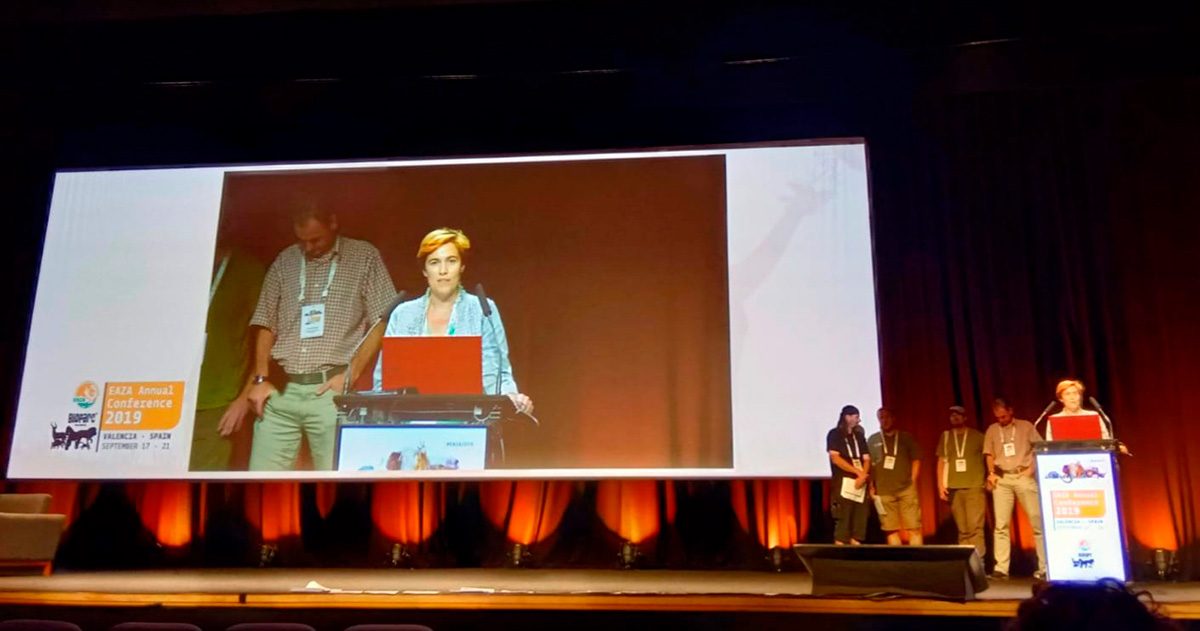
The Oasys MiniHollywood park participated again this year in the European Associations of Zoos and Aquaria (EAZA) Annual Conference, one of the most important events worldwide on the conservation of fauna and nature. It was held from September 17 to 22 at Bioparc Valencia.

EAZA is an association comprising more than one hundred institutions that work on conservation, research, and education. It aims to uphold the highest standards of care, breeding, and management of animals in zoological institutions.

More than 800 scientists from all over the world participated in the conference, including specialists on conservation, management, transportation, nutrition, and other aspects related to the species of wild animals in European zoos and aquaria.

Like every year, the Oasys MiniHollywood zoological reserve took part in these conferences, contributing its knowledge in order to take stock of the status of some threatened species. José María Rodríguez, Technical Director of the park, and Melody Cortés, conservationist and veterinarian, attended on behalf of Oasys MiniHollywood.

EAZA Annual Conference 2019

The zoological reserve participated in a more prominent manner in the feline working groups (Felid TAG), given that veterinarian Melody Cortés is the person in charge of the jaguarundi feline (Herpailurus yagouaroundi). This animal is especially threatened in the jungles of Mexico and Argentina due to habitat loss and human factors.

Cortés spoke to participants about the current condition of this species in captivity as well as the existing action plans to guarantee the survival and better conservation of the genetics of these specimens in the mid- and long-term, both in European and Latin American institutions.

During this meeting, other threatened species and different recovery plans were discussed, such as in the speech by Antonio Rivas Toñé, manager of the Conservation and Reintroduction project for the Iberian lynx (Lynx pardinus).

Antonio Rivas in EAZA Annual Conference 2019

In addition to a noteworthy presentation, he spoke of a very successful future for the extension of the lynx throughout a large part of the Iberian Peninsula, thus recuperating part of Spain’s native fauna given that by conserving this species, the entire Mediterranean ecosystem is preserved.

For another year, Oasys MiniHollywood took part in the largest annual conference on the protection and conservation of species and the environment.


old-west7-1-1200x800.jpg

27 diciembre, 2019 Western

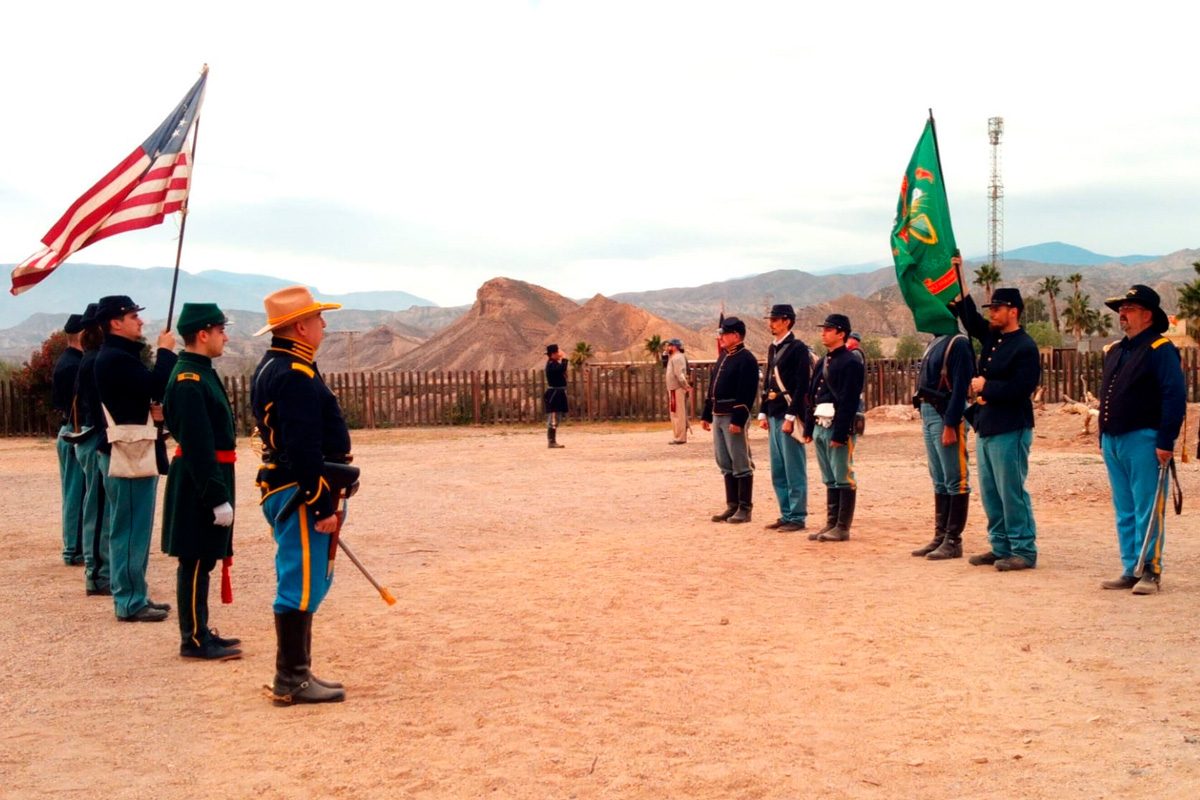
This past weekend, November 15 to 17, the Oasys MiniHollywood Western town, located in Tabernas (Almeria) hosted the International Historical Reenactment Old West History, the most renowned Western historical reenactment event in Spain. Attendance at this year’s edition was a great success.

For two days, visitors from all over Spain and the world enjoyed numerous activities related to the Far West. These included reenactments of historical events and episodes such as the Gunfight at the O.K. Corral or the 1868 signing of the Treaty of Fort Laramie, which featured the special participation of the historian Raúl Matarranz.

In total, more than 200 historical reenactors from all over Spain and other countries such as France, Germany, and Argentina participated in the performances. Participants included Codex Belix, Imperial Service, and La Cruz de Victoria as well as international groups such as Go West or L’Epoque des Cavalcades.

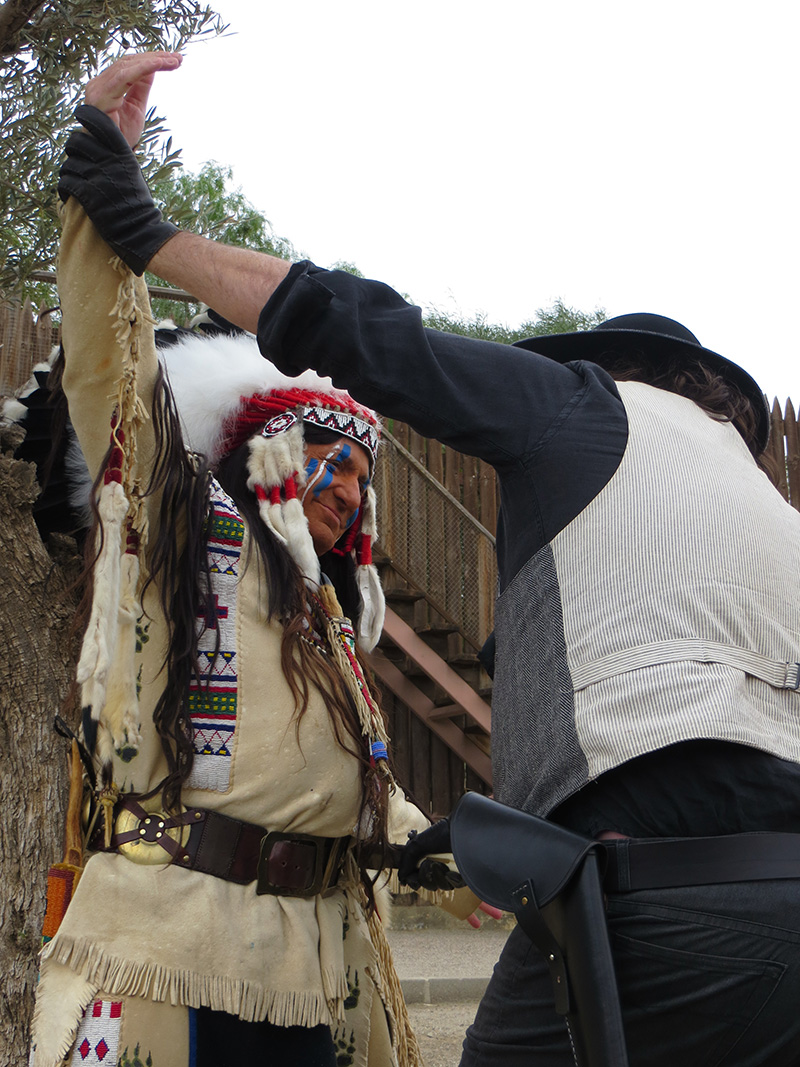
Reenactments of legendary Far West personalities like Wyatt Earp, Buffalo Bill, Calamity Jane, and Crazy Horse, among many more, also took place with the participation of real actors. The Almeria reenactment group Far West Frontier was in charge of this activity.

Characters of Far West

What’s more, several conferences also took place, including “Tombstone: the Most Violent City in the West. Fact or Fiction?” by the historian Miguel Ángel Quero; “The United States Army in the Second Half of the 19th Century,” by Raúl Matarranz; and “The Weapons of the Old American West,” by Leonardo Jiménez.

One of the favorite activities among attendees was the exhibition of Playmobil dioramas -under the care of the Jorge Olaya family- and the Madelman of Valencia exhibition, both set up in the railway wagon. Another favorite was the “taming, lassoing, and riding in the West: the life of a cowboy.”

Throughout the weekend, attendees enjoyed typical American dishes such as Mexican chile, pork ribs, and other barbecue dishes at the Arizona buffet restaurant.

At 6:30 p.m. on Sunday, after the last of the activities, the closing ceremony of the Historical Reenactment was led by the organizers: Leonardo Jiménez, Manuel Olaya, and José María Rodríguez. They awarded certificates of participation to each of the reenactors who made this magnificent event possible.

This is the third edition of this event, which is unique in Spain. This year, there was a considerable increase in the size of the audience with respect to last year, establishing it as one of the most important events in the Western genre.

Third edition of Old West History


img-20191201-wa0030.jpg

23 diciembre, 2019 Actividades0

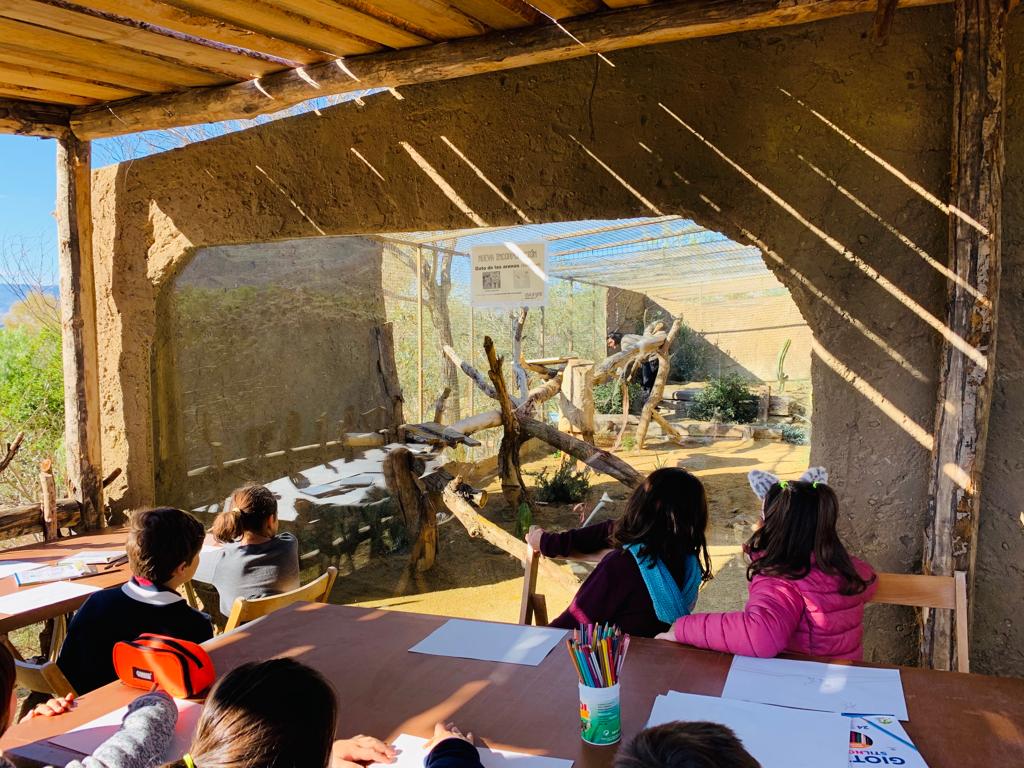
El parque temático Oasys MiniHollywood ha celebrado un concurso de dibujo infantil basado en uno de los felinos más misteriosos de la reserva zoológica: el gato de las arenas (Felis margarita), una especie originaria de zonas desérticas de África y Asia y que se encuentra dentro de un programa europeo de cría en cautividad debido a que está amenazado en su medio natural. El objetivo era dar a conocer a esta especie tan simpática de la mejor forma: jugando.


Los participantes se reunieron en las nuevas instalaciones de “pequeños mamíferos” para conocer y observar a dos ejemplares de Felis margarita llamados Shibam y Gobi, los cuales provienen de zoológicos del norte de Europa. Seguidamente, los participantes se pusieron manos a la obra para conseguir los mejores retratos de nuestra pareja.

El equipo de Educación fue el encargado de valorar y elegir los mejores diseños, una decisión difícil debido a la calidad de todos los dibujos. Tras una breve deliberación, dieron a conocer a los ganadores y sus premios: 


Jesús Rodrigo Siciliano, ganador de un pase anual gratis y un peluche grande de orangután de nuestra tienda.

Mar Salvador López, ganadora de una figurita de pantera.

Cayetana López Contreras, ganadora de un peluche de tigre.

Además de los tres primeros puestos, también participaron artistas como Francisco, Darío, Yan, Juan Antonio y Eva. Queremos darle las gracias por participar y ceder sus dibujos para que decoren nuestras instalaciones. Desde Oasys MiniHollywood, ¡esperamos verles pronto, tanto apuntándose al siguiente concurso, como visitando nuestras instalaciones!


dia-montanas4.jpg

17 diciembre, 2019 EventosSin categorizar0


El pasado domingo 15 de diciembre celebramos en el parque temático Oasys MiniHollywood el Día Mundial de las Montañas, ya que uno de nuestros claros objetivos es concienciar a nuestros visitantes sobre la conservación de la biodiversidad y el medioambiente.

Por esta razón, nos sumamos a las actividades promovidas por la COP25 en Madrid (Conferencia de las Naciones Unidas sobre el cambio climático) e invitamos a todos nuestros visitantes a conocer unos de los puntos más altos y más emblemáticos del parque.

Las montañas albergan el 15 % de la población mundial y son también el hábitat de un cuarto de los animales y plantas terrestres, suministrando agua dulce para más de la mitad de la humanidad. Su conservación resulta clave para la vida. Sin embargo, se encuentran gravemente amenazadas por el cambio climático debido, entre otras causas, al derretimiento de los glaciares.

Por ello, intentamos inculcar a todos nuestros visitantes la importancia de reducir nuestro impacto en el planeta, cuidando el medioambiente, reduciendo la huella de carbono y apoyando la protección de la biodiversidad.

Oasys MiniHollywood, una vez más, comprometido con la protección de la naturaleza.


felis-margarita3-1200x900.jpg

16 diciembre, 2019 Animals0

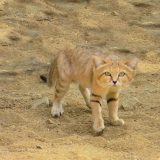
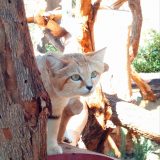
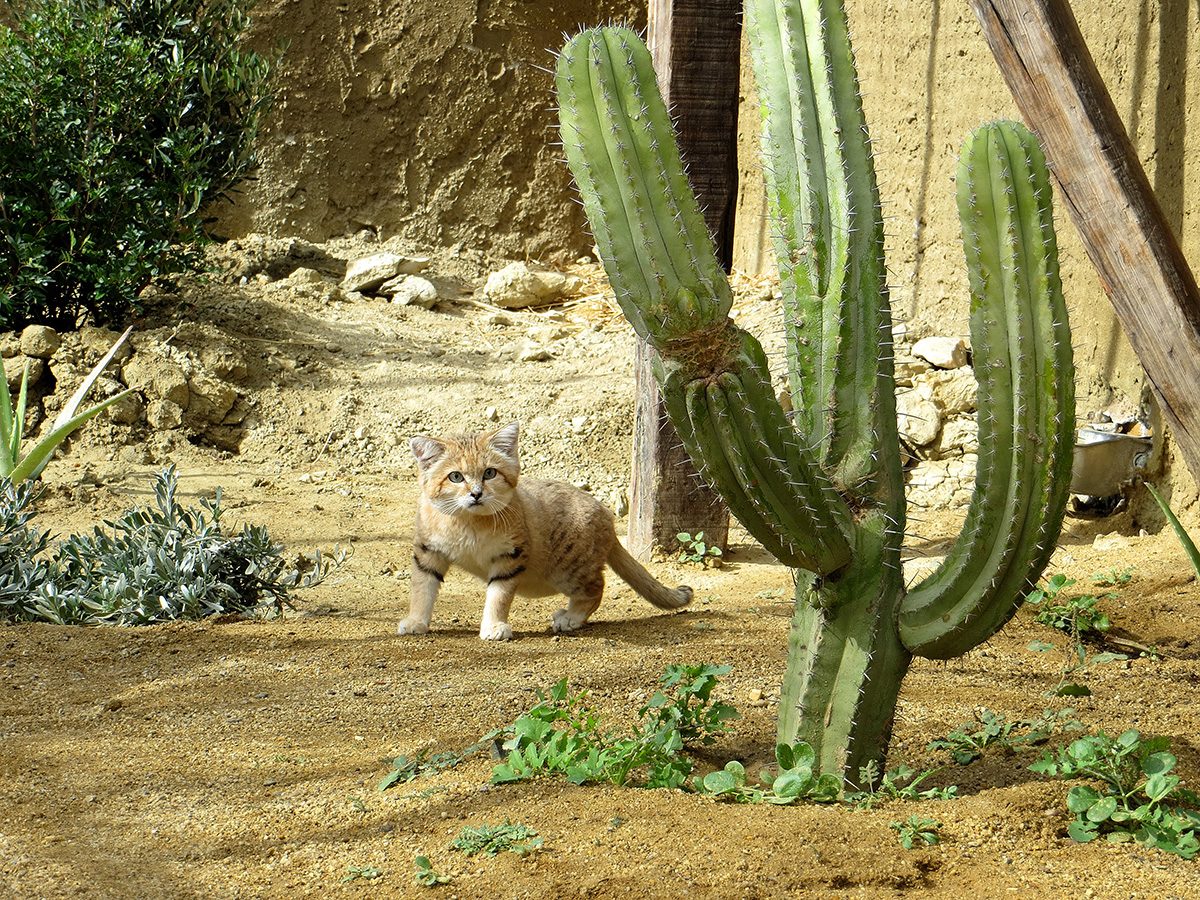
Oasys MiniHollywood is in luck. Recently, several species have joined our big family at our zoological reserve. More specifically, the newly arrived animals include several sand cats (Felis Margarita), several yellow-necked spurfowls (Pternistis leucoscepus), and a pair of Blanford’s foxes (Vulpes cana). 

All of these species come from different zoological reserves that Oasys MiniHollywood has collaborations agreements with.

Felis margarita at Oasys MiniHollywood

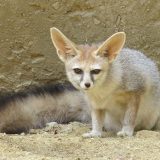
The sand cats (Felis margarita) come from a zoo in Lyon, France and from the Parken Zoo in Sweden. Its population in the wild is seriously threatened mainly due to human activity, poaching, habitat degradation, and competition with feral domestic cats. All of these factors have led to its disappearance in some of its places of origin.

Sand cats, along with the black-footed cat (Felis nigripes), are the smallest members of the Felis genus. These felines are the best adapted to life in the desert and they live in areas that range from Africa and the Arabian Peninsula to Pakistan.

According to the International Union for Conservation of Nature (IUCN), its current degree of threat is least concern due to a lack of precise data. However, it is believed that on the next census, they will be elevated to near threatened or vulnerable, like the Felis margarita margarita, a subspecies from the Sahara, and Felis margarita scheffeli, a Pakistani subspecies.

One peculiarity of the Felis margarita is that the sole of its paws are entirely covered in fur, which protects them from coming into contact with the burning desert sands. It is preferably active at twilight or at night and they stay hidden under bushes or among rocks. They have also been observed occupying the dens of other species, such as the fennec fox (Vulpes zerda), for example.

These small felines eat rodents, hares, birds, snakes, and insects, among other things. In addition to the pressure on their population caused by man, they are also preyed upon by jackals and birds of prey.

Oasys MiniHollywood is the only member of the European Associations of Zoos and Aquaria (EAZA) in Spain and the only member of the Iberian Association of Zoos and Aquaria (IAZA) which has this beautiful species and actively participants in the program for its conservation (EEP).

Yellow-necked spurfowl

After a journey of more than 1,350 miles from the Rotterdam zoo, three yellow-necked spurfowls (Pternistis leucoscepus) have arrived at Oasys MiniHollywood. These birds belong to the pheasant family and are originally from Somalia, Kenya, and other countries in east Africa.

The males sing a very striking song when they are in heat and their necks turn an intense yellow. They become fertile after one year of life and lay small numbers of eggs. Laying begins at the beginning of March and the eggs are incubated for around 20 days.

They have been introduced to the Mamili aviary, in the middle of the Okavango area, where they share the facilities with violet turacos, guinea turacos, and hamerkops. These three males have been together since their birth in the Netherlands. At Oasys MiniHollywood, we are searching for mates in order to breed this beautiful species in our facilities.

Blanford’s foxes from the Arabian Peninsula

Oasys MiniHollywood has signed an agreement with Arabia’s Wildlife Center, located in Sharjah, in the United Arab Emirates. Thus, some of the animals from our zoological reserve will travel to this wildlife center.

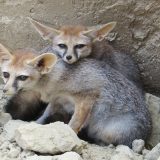
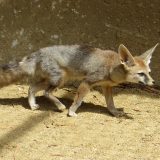
Likewise, a pair of Blanford’s foxes (Vulpes cana) from the Emirates has joined our collection. After a period of adaptation, they are now enjoying life in a well-deserved enclosure in the Small Carnivores area along with other species of foxes and felines. All of these animals are perfectly adapted to the climate of Tabernas.

With this last addition, Oasys MiniHollywood has become the only park in the Iberian Peninsula and indeed all of Europe that has this beautiful species of fox.

Come visit them at Oasys MiniHollywood!


felis-margarita3-1200x900.jpg

13 diciembre, 2019 Especies0

Oasys MiniHollywood está de enhorabuena, ya que recientemente varias especies se han incorporada a la gran familia de nuestra reserva zoológica. Concretamente, los nuevos animales en llegar son varios ejemplares del gato de las arenas (Felis Margarita), otros de francolín de garganta amarilla (Pternistis leucoscepus), así como una pareja de zorros de Blanford (Vulpes cana).

Todas estas especies provienen de diferentes reservas zoológicas con las que Oasys MiniHollywood mantiene acuerdos de colaboración.

Felis margarita en Oasys MiniHollywood

Los ejemplares de gato de las arenas (Felis margarita) provienen del jardín zoológico de Lyon, en Francia, y del Parken Zoo, en Suecia. Su población en libertad está gravemente amenazada debido principalmente a la acción del hombre, a la caza furtiva, la degradación de su hábitat y a la competencia con gatos domésticos asilvestrados, todos ellos factores que lo han conducido a la desaparición en algunos de sus lugares de origen.

Es el miembro más pequeño del género Felis, junto con el gato de pies negros (Felis nigripes). Son los felinos mejor adaptados a la vida en el desierto, extendiéndose desde África y Arabia, hasta Pakistán.

Actualmente su grado de amenaza, según la Unión Internacional de Conservación de la Naturaleza (UICN), es de preocupación menor debido a la falta de datos precisos, pero se estima que en el siguiente censo subirá a casi amenazado o vulnerable, como así lo están hoy en día el Felis margarita margarita, subespecie del Sáhara y el Felis margarita scheffeli, subespecie pakistaní.

Una peculiaridad del Felis margarita es que tiene la planta de las patas totalmente cubiertas de pelo, de tal manera que le protege del contacto con las ardientes arenas del desierto. Sus hábitos son preferentemente crepusculares o nocturnos y se mantienen agazapados debajo de los arbustos o entre las rocas. También se les ha documentado ocupando madrigueras de otras especies como, por ejemplo, de los zorros de fénec (Vulpes zerda).

Estos pequeños felinos se alimentan de roedores, liebres, pájaros, serpientes, insectos, entre otros. Además de la presión generada por el hombre, también sufren la depredación de chacales y aves rapaces.

Oasys MiniHollywood es el único miembro de la Asociación Europea de Zoos y Acuarios (EAZA), en España, y el único miembro de la Asociación Ibérica de Zoos y Acuarios (AIZA), que posee esta hermosa especie y participa activamente en el proyecto de conservación (EEP) de la misma.

Francolines de garganta amarilla

Tras un viaje de más de 2.200 kilómetros desde el zoológico de Róterdam, han llegado a Oasys MiniHollywood tres ejemplares de francolín de garganta amarilla (Pternistis leucoscepus). Estas aves pertenecen a la familia de los faisanes y son originarias de Somalia, Kenia y otros países de África oriental.

Los machos tienen un canto muy llamativo cuando entran en celo y su garganta se pone de un color amarillo intenso. A partir del primer año de vida ya pueden ser fecundos y hacer puestas pequeñas, que comenzarán sobre principios del mes de marzo con una incubación en torno a los 20 días.

Se han incorporado a la pajarera Mamili, en pleno centro de la zona del Okavango, donde comparten instalación con los turacos violeta, los turacos persa y las aves martillo. Estos tres machos permanecen juntos desde su nacimiento en los Países Bajos. Desde Oasys MiniHollywood estamos buscándoles parejas para conseguir criar esta bonita especie en nuestras instalaciones.

Zorros de Blanford desde Arabia


Por otro lado, Oasys MiniHollywood ha llevado a cabo un convenio con Arabia’s Wildlife Center, ubicado en Sharjah, en los Emiratos Árabes Unidos, por el cual algunos de los animales de nuestra reserva zoológica viajarán hasta este centro de fauna.

Asimismo, una pareja de zorros de Blanford (Vulpes cana) procedentes de este Emirato se han incorporado a nuestra colección. Tras un período de adaptación, disfrutan ya de un merecido recinto en la zona de Pequeños Carnívoros, junto con otras especies de zorros y felinos, todos ellos adaptados perfectamente al clima de Tabernas.

Con esta última incorporación, Oasys MiniHollywood se ha convertido en el único parque de la península Ibérica y de toda Europa que cuenta con esta hermosa especie de zorro.

¡Venga a visitarlos a Oasys MiniHollywood!


concierto-orquesta-1200x804.jpg

10 diciembre, 2019 EventosSin categorizar0

El parque temático Oasys MiniHollywood continúa ofreciendo planes y actividades culturales a sus visitantes. El pasado 8 de diciembre, el poblado del Oeste acogió un encuentro de jóvenes orquestas, en la que participaron la Sinfonietta San Francisco de Paula (Sevilla) y la Orquesta Joven de Almería, dirigida por Michael Thomas.

Los visitantes pudieron disfrutar de un concierto de clásicas bandas sonoras del cine, con entrada libre, que se realizó en el saloon The Yellow Rose y en el que intervinieron más de cien jóvenes músicos.

Con un inicio increíble y muy cinematográfico que arrancó con la famosa banda sonora de Odisea en el Espacio 2001, de Stanley Kubrick, se desarrolló un gran concierto mezclando piezas de diferentes compositores. Destacó la adaptación musical de una de las películas del Oeste más importantes rodadas en Oasys MiniHollywood, El Bueno, el feo y el malo, escrita por Ennio Morricone.


Además de la calidad, el buen talante y el humor estuvieron presentes desde el principio, como es característico en el estimado director Michael Thomas. Todos los integrantes de las orquestas lo recibieron con pinturas de guerra y plumas, mientras que el director se subió al atril con una estrella de sheriff y un gorro de cowboy. El concierto terminó con la representación de varias piezas navideñas, que fueron también cantadas por el público asistente.

Ambas orquestas, además, ofrecieron otros conciertos en el Teatro Auditorio de Vera, el día 7, y en la iglesia Nuestra Señora de la Encarnación de Tabernas, después de su actuación en Oasys MiniHollywood.


calao-atrata3-1200x800.jpg

2 diciembre, 2019 Animals

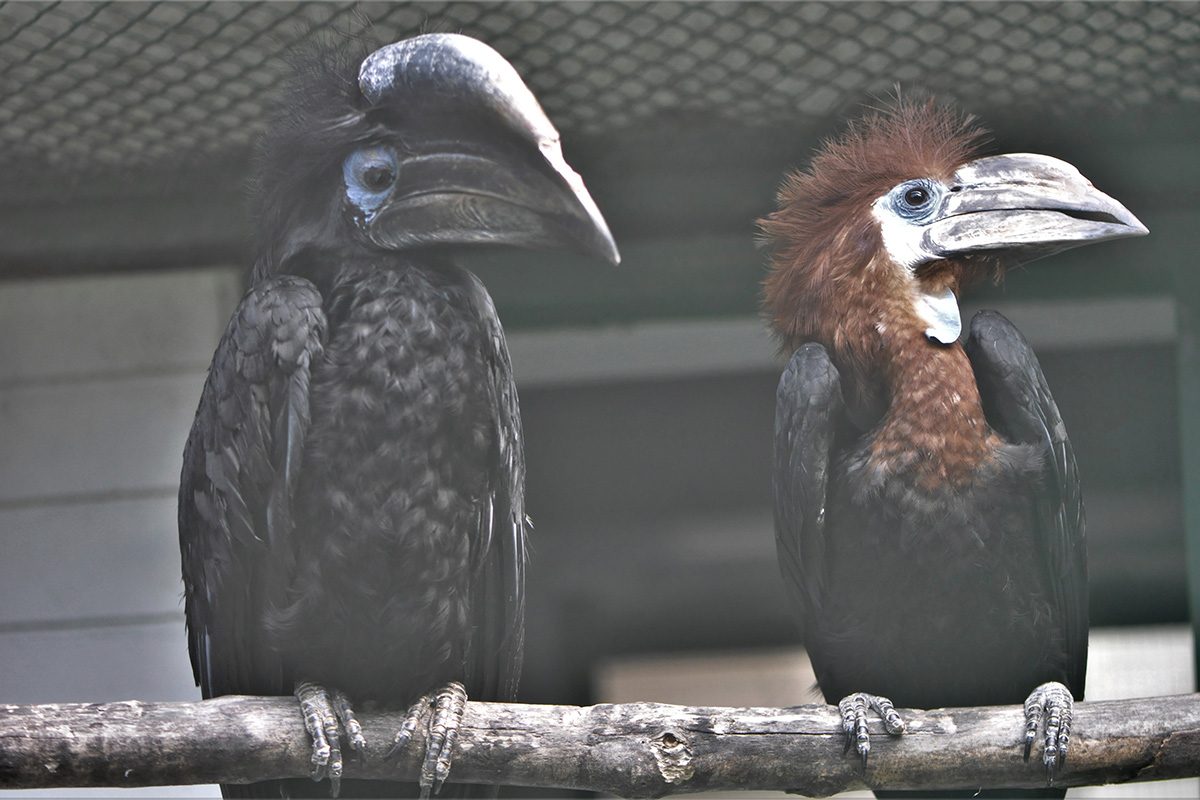
Our black-casqued hornbill (Ceratogymna atrata) has just been transfered to the Bojnice Zoo in Slovakia. The objective is to continue with the conservation work for threatened species and achieve reproduction with the female that the Bojnice Zoo already has.

After more than 48 hours of travel, the bird arrived at the facilities, where they performed a clinical veterinary examination to confirm that he was in perfect condition.

Following the quarantine period, he needed time to adapt to his new facilities. Once this was successfully completed, he was introduced to his future partner. The two were happy together from the very first moment. Next, they were given access to outside facilities, where they are together all the time. We are sure that our first Ceratogymna atrata specimen is in good hands and the family will soon grow larger.

The black-casqued hornbill (Ceratogymna atrata) is one of the animals that is most representative of our conservation work for threatened species, as it can hardly be found in the wild and there are no reliable data on this species. Thanks to this effort and commitment, the black-casqued hornbill family at Oasys Hollywood grows every year.

The Bojnice Zoo is part of EAZA (European Associations of Zoos and Aquaria), as is Oasys MiniHollywood. It actively participates in many conservation projects for threatened species. It is one of the leading specialists in the handling and care of birds such as, for example, the crowned hornbill (Tockus alboterminatus), the eastern yellow-billed hornbill (Tockus flavirostris), the black-and-white-casqued hornbill (Bycanistes subcylindricus), the northern ground hornbill (Bucorvus abyssinicus), the southern ground hornbill (Bucorvus leadbeateri), and the wrinkled hornbill (Aceros corrugatus).

This species is scarcely represented in European zoos despite the fact that species can hardly be observed in the wild. In fact, the International Union for Conservation of Nature (IUCN) has not granted it any degree of threat. Our specimens form part of the European Endangered species Programme (EEP).


shutterstock_238810516-1.jpg

2 diciembre, 2019 Western

The people who are known as American Indians are the indigenous people of North America. Despite what you may think, the native people of the United States were divided into dozens of ethnic groups with very different customs, languages, and lifestyles. The Apache, Sioux, and Cheyenne are some of the most well-known tribes thanks to their portrayal on the silver screen, but there were many more.

History: Why were Native Americans called Indians? 

When Christopher Columbus went ashore in Guanahani (Bahamas) on October 12, 1492, he thought he had arrived in India. The navigator had set off two months and nine days earlier from Puerto de Santa María, in Spain, in search of a new route to India by crossing the ocean.

It wasn’t until 15 years later that the new colonizers discovered that these lands, where neither gold nor spices were plentiful, was not India, but rather another continent that they named America. Hence, during the first contact with American indigenous people, the colonizers called them Indians.

American Indian Tribes 

Some of the most well-known American Indian tribes are the Apache, the Sioux, the Cherokee, and the Cheyenne. There are also many others, such as the Blackfeet, the Arapaho, and the Navajos. They have a significant population and have played an important role in the history of the United States.

Sioux

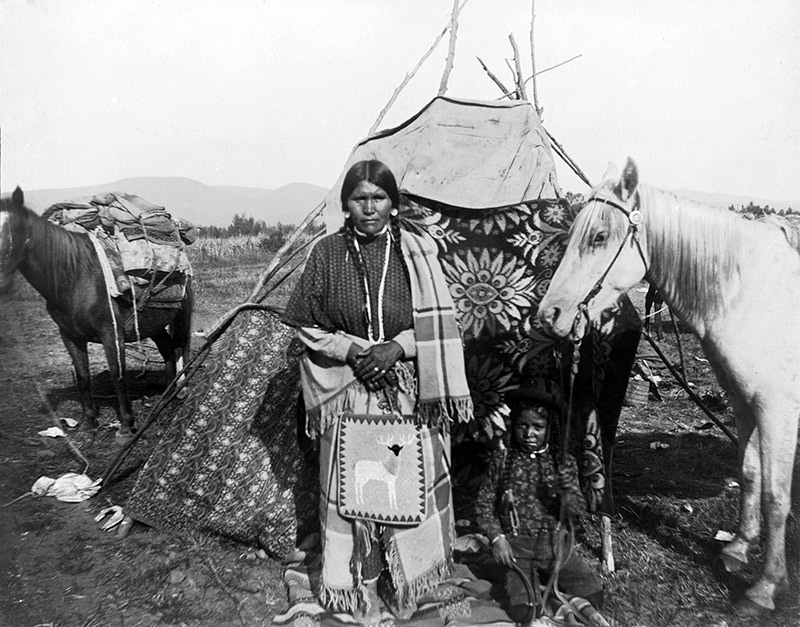
The Great Sioux Nation live on the Great Plains of the United States. They are divided into various clans or tribes: the Lakota, the Nakota, and the Dakota, each of which speak a different variety of the Sioux language. In contrast to other indigenous peoples, the Sioux were nomads and experts at hunting bison. They moved around following the buffalo herds and lived in the legendary tipis, cone-shaped dwellings covered in bison skin. When the colonizers again introduced horses to America, the Sioux soon dominated them and became known as excellent jockeys.

Apaches 

The Apache are a group of indigenous tribes who live in the arid lands of Arizona, New Mexico, Texas, and northwestern Mexico. They were hunters, ranchers, and farmers. A large part of their traditional diet is based on corn, beans, sheep, and goats. Like the Sioux, the Apaches put up great resistance to invasions from the times of the Spanish colonizers. Today, the Apache are the most numerous Native American tribe and is estimated to have a population of approximately 57,000 people.

Cherokee

The Cherokee are an indigenous people who used to live on the southeastern coast. In ancient times, they migrated from the Great Lakes region to south of the Appalachian Mountains and used to live in what is today the area from North Carolina to Alabama. The large Cherokee population lived off of hunting and growing crops such as corn, beans, and squash. Unfortunately, they were later forcibly moved to Oklahoma. 

Cheyenne

Like the Sioux, the Cheyenne live on the great plains, but in the northernmost area, from the Black Hills of South Dakota to Colorado. They are divided into groups and were allies of the Arapaho and the Sioux. The Cheyenne participated alongside them in important battles such as Red Cloud’s War (1866-1868) and the Black Hills War (1876-1877).

Customs of the American Indians 

American Indians are generally known for having the spirit of warriors, being good hunters, and having great respect for nature. Nevertheless, their customs and languages are very different among the various tribes. 

It is calculated that when the Europeans arrived to North America, there were more than 300 different indigenous languages among the tribes. Of these, more than half have disappeared and some of those that are still spoken are at risk of extinction. 

One of the most popular American Indian customs is group dances, rituals that are done for a variety of purposes, such as asking for good luck from mother nature. Dances include the bison dance, the rain dance, or the famous sun dance, which was done to ask for good health. Tribe leaders directed religious life and carried out different rites and ceremonies, some of which included fasting and offerings.

Another of the most important customs was a pow-wow, which are meetings of the native tribes of North America. They are still held today.

Clothing of the American Indians

Like their customs, each tribe’s clothing was different. In general, in the majority of native tribes, the men wore breechcloths and protected themselves from the cold with pants and deer and bison skin. On their part, women tended to wear leather dresses as well as tunics which covered their skin.

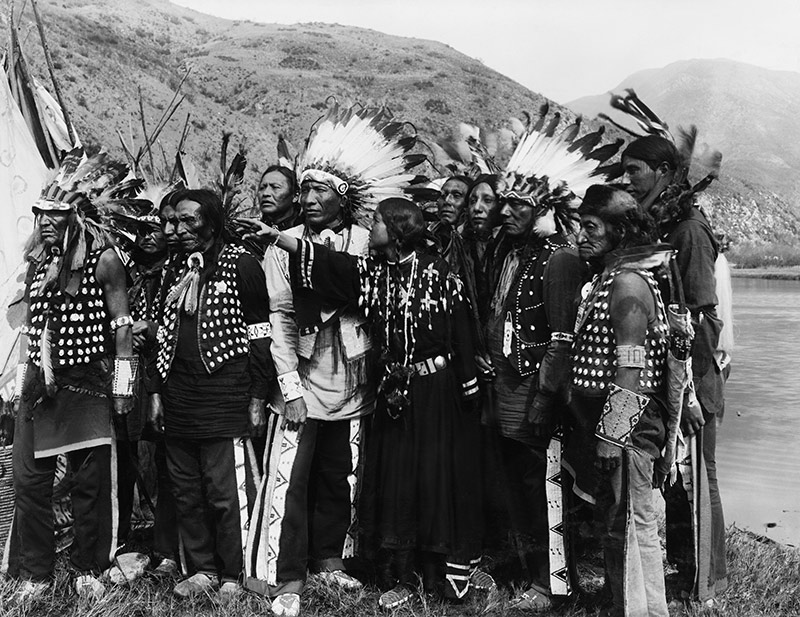
For ceremonial acts, some tribes wear special tunics decorated with feathers, the skin of animals such as hedgehogs, and many other accessories and decorations. 

The Most Famous Native American Chiefs

Some of the most famous Indian chiefs in the West include Sitting Bull, chief of the Sioux who, along with Crazy Horse, another Sioux leader, led the famous Battle of Little Bighorn. Red Cloud, who was leader of this tribe before them, was another of the most notable Indian chiefs who fought in what is known as Red Cloud’s War. As a result of this war, the Treaty of Fort Laramie was signed. 

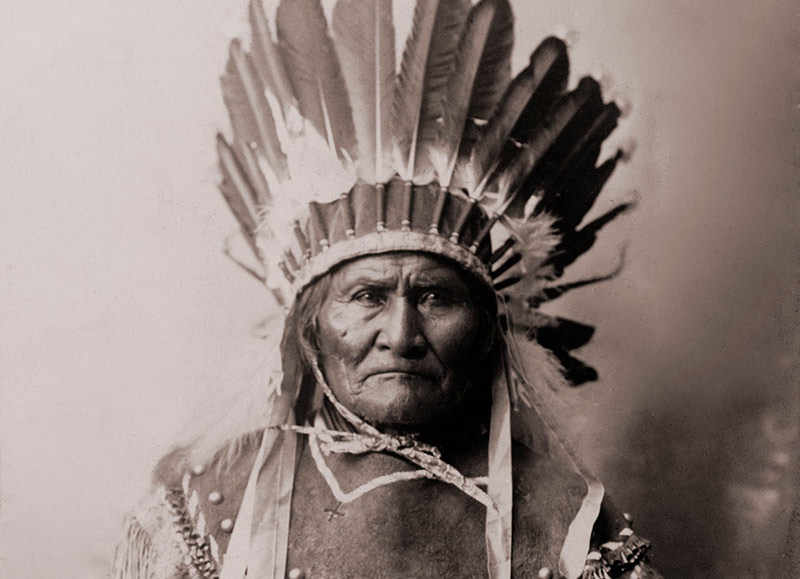
As can be seen in United States history, the Sioux were one of the tribes that was most often at war. There were also notable Indian chiefs from other tribes such as the Geronimo and Cochise, from the Chiricahua clan, which belonged to the Apaches, or the man known as Chief Joseph, from the Nez Percé tribe. 


If you are interested in the Far West, don’t miss out on a visit to Oasys MiniHollywood! Enjoy cowboy shows, cancan dancing, and authentic Western movie sets in addition to a zoological reserve with more than 200 different species.


destacada-1.jpg

2 diciembre, 2019 Western

When the North Americans began to invade Native American territory and tried to force them onto minuscule reservations that were not very fertile, the leaders of these tribes opposed. This triggering fierce wars, many of which were recreated by Hollywood in the movie theater. Today we bring you a list of the most famous Indian chiefs in the West who put the United States government in check.

Sitting Bull (Tatanka Iyotanke)

Sitting Bull is one of the most well-known American Indian chiefs for having led the most famous battle between Native and North Americans, the Battle of Little Bighorn on June 25, 1876. Sioux and Cheyenne warriors defeated the Seventh Calvary under the command of General George Armstrong Custer.


In 1868, several Sioux chiefs, including the famous Red Cloud, signed a peace treaty with the US government. The Treaty of Fort Laramie established the Black Hills Reservation in Dakota territory. However, Sitting Bull did not accept the agreement and continued attacking forts in the area of Missouri. Despite his victory at Little Bighorn, in 1877 he had to flee to Canada with a few thousand followers from his tribe, but the lack of food and harsh conditions forced them to return after a time. Sitting Bull surrendered and the government sent them to the Standing Rock Reservation. 
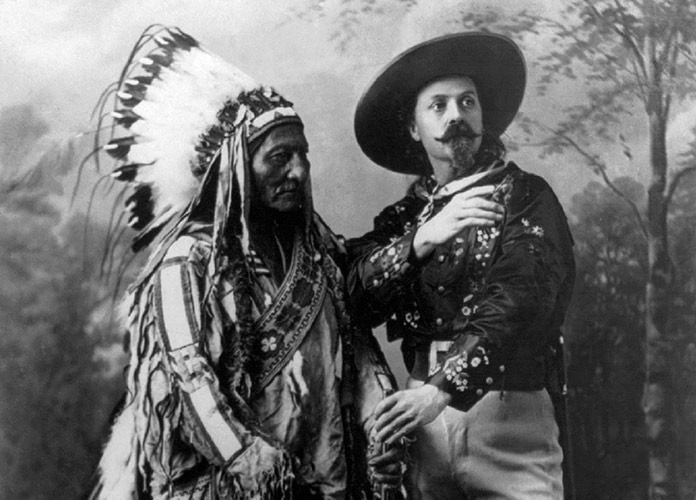
Later, the Sioux leader left that place for a time to join celebrity Buffalo Bill‘s curious show. The spirit dances that they did on the reservations to throw out the white men roused the suspicions of the United States government, which sent men to stop them. After he refused to be illegally arrested, he was shot in the chest. In the ensuing chaos, his son and three hundred members of his tribe were also killed.

Crazy Horse (Tasunke-Witko)

Crazy Horse was another Indian leader who fought alongside Sitting Bull in the Battle of Little Bighorn. He allied with the remaining Native American chiefs to expel the whites from their territory. It was he who killed General Custer, a scene that has been portrayed in numerous movies such as They Died with Their Boots On, Fort Apache, The Great Sioux Massacre, or Winchester 73. 

Tasunke-Witko was the chief of the Oglala, one of the Sioux tribes. At 16 years of age, he adopted his father’s name and fought in his first battle. In the Treaty of Fort Laramie, signed by chief Red Cloud, the Indians renounced a part of their territories but received others, among them the Black Hills, a sacred site for Native Americans.  

However, the problems began when rumors started to fly about the existence of gold at that place. Many settlers started to move to the area and despite attempts to buy the territory, the Indians refused. Crazy Horse, just like Chief Sitting Bull, refused the Treaty of Fort Laramie and declared war on the Americans. He did not die on the battlefield, but rather was treacherously assassinated by a North American soldier who stabbed him with a bayonet in the back. 

Red Cloud (Makhpyia Luta)


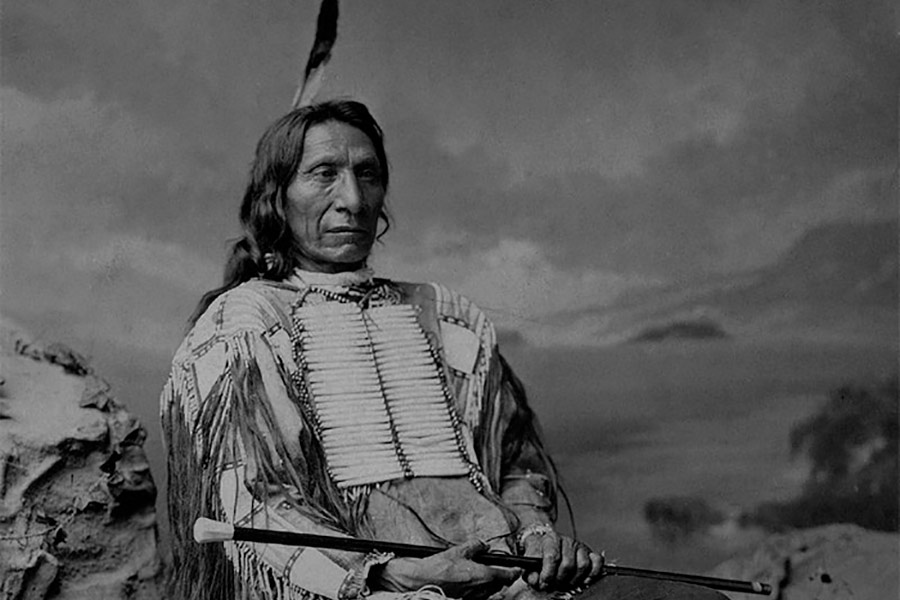
Red Cloud was a respected Sioux Indian chief and the only one who won a war with the United States of America, the so-called “Red Cloud’s War,” which took place between 1866 and 1868. The Sioux, along with the Cheyenne, defeated the North American Army and the government was obligated to sign the Treaty of Fort Laramie, in which it gave up forts that it had built on the Bozeman Trail, which crossed Lakota territory in this Amerindian nation. In turn, it granted them their own autonomous lands. 

Although the US did not keep its word, Red Cloud did not participate in the later Great Sioux War, led by Sitting Bull and Crazy Horse. Despite the famous battle of Little Bighorn, since then, the Native Americans lost what little they had and hunger made the tribes give up little by little. 

First it was the Cheyenne and later, the leaders Crazy Horse and Sitting Bull. The Sioux were reduced to living in uncomfortable spaces which were spread out and not very fertile. This made them dependent on government aid. In contrast to the other leaders, Red Cloud died of old age. He always tried to negotiate a better situation for his people, although he was unsuccessful.

Geronimo (Goyathlay)

Unlike the three other great Sioux chiefs, Geronimo belonged to the Chiricahua tribe of Apaches. He was born in Arizpe, in the state of Sonora (Mexico), and was a nightmare for both the Mexican and the American governments. In fact, at the beginning, he fought to get revenge for the murder of his wife and daughter at the hands of the Mexicans.  

He is one of the most controversial Indians, as many point to the fact that rather than a defender of Native Americans from the oppression of white people, he was violent and a looter. In any case, he carried out several attacks to liberate the Apaches from the reservations.  

Between attacks, Geronimo and his men would take refuge in the Sierra Madre mountains, in the Mexican state of Chihuahua. Following a period of resistance, Geronimo gave up and was transferred to a reservation in Oklahoma, where he lived peacefully to 79 years of age.

Cochise (Shi-ka-She)

Like Geronimo, Cochise was the chief of the Chiricahua Apaches. In fact, he was his predecessor. This Amerindian tribe lived between the territories in the south of the United States (New Mexico and Arizona) and the north of Mexico (Sonora and Chihuahua). Apaches and settlers had lived together for years without any incidents until Cochise was wrongly accused of kidnapping a settler’s daughter.

Cochise formed an alliance with his father-in-law, Mangas Coloradas, and with him, he started the famous Apache Wars, which kept the United States in check (1861 -1886) in Arizona Territory. In the end, the United States government reached an agreement with them so that they kept a reservation in part of the lands of their forefathers, between the Chihuahua mountains and the Sulphur Springs Valley.

Chief Joseph (Hin-mah-too-yah-lat-kekt, or Thunder Rolling Down the Mountain)

One of the most noble Indian chiefs in the West was Chief Joseph of the Nez Percé tribe. This official name comes from the French “nez percé,” which means pierced nose, a reference to these peoples’ custom of wearing a piercing in the nose.  

The Nez Percé lived around the Wallowa Valley, between the states of Idaho, Oregon, and Washington, a very fertile place that the North Americans soon started to covet. Although Chief Joseph was peaceful and tried to avoid war, the government violently forced them to move to reservations.  

Chief Joseph and his tribe had no other option than to rebel in 1877, which led to a bloody conflict in which few more than 400 Nez Percé survived. Although they won some battles, they did not win the war. After, they were taken to a reservation where many died of hunger and thirst. 

Chief Joseph never stopped writing letters the US government, demanding the right, like all other United States citizens, to live where they wanted to live. Finally, in 1880, the fewer than 300 surviving members of the tribe were allowed to return to the Northwest, but only to the Colville Reservation in Washington, not to the Wallowa Valley.